The latest UN Environment Programme (UNEP) emissions gap report suggests that unless the world begins to rapidly reduce greenhouse gas emissions the 1.5C goal of the Paris Agreement “will slip out of reach,”
The figure below, adapted from one created by CICERO’sDr Robbie Andrews, shows emission trajectories to limit warming to below 1.5C in the absence of net-negative emissions. The different lines show the emissions reductions that would be required if emissions had peaked in each year, between 2000 and 2026, with the current year (2019) highlighted in grey.
IF
If emissions had peaked and begun to decline after the year 2000, the 1.5C target would have been much easier to achieve, only requiring reductions of around 3% per year. By contrast, limiting warming to below 1.5C starting in 2019, without net-negative emissions, would require a 15% cut each year through to 2040.
Yeah, not gunna happen…
If emissions continue at current levels for another few years, then the only way to limit warming to below 1.5C in the absence of net-negative emissions would be to immediately cut all global emissions to zero.
Opining the lack of type 1 people in public leadership? Federal Election. Climate change anyone?
Looking back to look forward.
In 1916, the year my father was born, we only knew of our own galaxy. Think about that for a moment…
We did not think there were any other galaxies. Consider that in just over one lifetime, we have now observed/measured two black holes colliding with the Advanced Laser Interferometer Gravitational-wave Observatory (LIGO). Gravitational waves. We have come a long way. Perhaps.
[Source: CalTech ]
Energy
Just as naively, many of the greatest minds of the earliest 20th century where adamant that producing energy from the breaking down of atoms was nothing more than “moonshine”. In fact, Sir Ernest Rutherford’s famous declaration [and centuries of ‘evidence’] was totally upended less than twenty-fours hours later by Leo Szilard when he announced the nuclear chain-reaction. He conceived the nuclear chain reaction in 1933, patented the idea of a nuclear reactor with Enrico Fermi in 1934, and in late 1939 wrote the letter for Albert Einstein’s signature that resulted in the Manhattan Project that built the atomic bomb. The rest they say, is history.
That was completed in less time than the average student spends in school.
In the span of my father’s and my own life-times, Nikolai Kardashev (a Russian Physicist) posited in 1964 what is now known as the “Kardashev Scale”. Kardashev was looking for signs of extraterrestrial life within cosmic signals and developed a scale of energy/power usage.
It has 3 base classes, each with an energy disposal level: Type I (10¹⁶W), Type II (10²⁶W), and Type III (10³⁶W).
A Type I civilization—also called a planetary civilization—can use and store all of the energy available on its planet.
A Type II civilization—also called a stellar civilization—can harness the total energy of its planet’s parent star (the most popular hypothetical concept being the Dyson sphere—a device which would encompass the entire star and transfer its energy to the planet(s)).
A Type III civilization—also called a galactic civilization—can control energy on the scale of its entire host galaxy.
The scale is hypothetical, and regards energy consumption on a cosmic scale.
The salient point here is to note that the human race and planet earth is NOT on this scale.
Not yet, ever?
Even more puzzling is the growing awareness of the silence/lack of any obvious other example of a Type 1 or greater civilization anywhere in the observable universe.
We understand the universe to be 13.8 billion years old.
This is the Fermi Paradox, or more colloquially understood as “where is everybody?”.
The Fermi paradox is named after the aforementioned physicist Enrico Fermi and refers to the apparent contradiction between the lack of evidence for and various high probability estimates of the existence of extraterrestrial civilizations elsewhere in just the (our) Milky Way galaxy.
The basic points of the argument, made by physicists Enrico Fermi (1901–1954) and Michael H. Hart (born 1932), are:
There are billions of stars in the galaxy that are similar to the Sun, and many of these stars are billions of years older than the Solar system.
With high probability, some of these stars have Earth-like planets, and if the Earth is typical, some may have already developed intelligent life.
Even at the slow pace of currently envisioned interstellar travel, the Milky Way galaxy could be completely traversed in a few million years.
According to this line of reasoning, the Earth should have already been visited by extraterrestrial aliens, or at least their probes.
This may sound far-fetched, yet the law of big numbers is compelling. Many have described this as the challenge of all intelligent life. At some point, life “cracks the atom” and then faces “the great filter”.
The Great Filter
This probability threshold, which could lie behind us (in our past) or in front of us (in our future), might work as a barrier to the evolution of intelligent life, or as a high probability of self-destruction. The main counter-intuitive conclusion of this observation is that the easier it was for life to evolve to our stage, the bleaker our future chances probably are.
The idea was first proposed in an online essay titled “The Great Filter – Are We Almost Past It?“, written by economist Robin Hanson. The first version was written in August 1996 and the article was last updated on September 15, 1998.
Using extinct civilizations such as Easter Island as models, a study conducted in 2018 posited that climate change induced by “energy intensive” civilizations may prevent sustainability within such civilizations, thus explaining the lack of evidence for intelligent extraterrestrial life.
Whatever the case, the notion of the anthropocene is increasingly valid and the national and global debates over energy sources, current and future, have starkly different trajectories for both the short term quality of life of millions and frankly, the sustainability of human civilization.
With no evidence of intelligent life other than ourselves, it appears that the process of starting with a star and ending with “advanced explosive lasting life” must be unlikely. This implies that at least one step in this process must be improbable. Hanson’s list, while incomplete, describes the following nine steps in an “evolutionary path” that results in the colonization of the observable universe:
A sobering thought [understatement] when considering energy and climate policies that will set trajectories for life-times to come.
It would be useful to have a few more Type 1 People in public life don’t you think?
Michio Kaku is an American theoretical physicist and as early as 1991, was expressing as similar concern.
Michio Kaku
Carl Sagan – The Demon Haunted World
I couldn’t send such a diatribe without a reference to the venerable (and increasingly prescient) Carl.
“Science is more than a body of knowledge; it is a way of thinking. I have a foreboding of an America in my children’s or grandchildren’s time—when the United States is a service and information economy; when nearly all the key manufacturing industries have slipped away to other countries; when awesome technological powers are in the hands of a very few, and no one representing the public interest can even grasp the issues; when the people have lost the ability to set their own agendas or knowledgeably question those in authority; when, clutching our crystals and nervously consulting our horoscopes, our critical faculties in decline, unable to distinguish between what feels good and what’s true, we slide, almost without noticing, back into superstition and darkness.”
The Volvo motor-car company confirmed in 2017 the strategic decoupling of their vehicles from the internal combustion engine, supplementing all vehicles from 2019 with electric motors.
We are committed to electrification, so from 2019 all new Volvo car models will include an electric motor. [ Hakan Samuelsson – President & CEO ]
It will launch five fully electric cars between 2019 and 2021, three of which will be Volvo models and two of which will be high performance electrified cars from Polestar, Volvo Cars’ performance car arm.
Whilst writing this article, Bitcoin passed the $USD9000 dollar mark and has peaked a little over USD$ 9600…$BTC.X
You may ask yourself “why do bitcoins have value“. My personal view is that any parent that has had to explain to their children why they should not give away their brand new bicycle in exchange for a “golden swap card” has some sense of the global bubble formed around bitcoin… but that is for another time.
[Traders Sentiment – Source: plus500.com]1 Bitcoin currently equals $12, 689.03 Australian Dollars. The price movements look like this.
[ Price of Bitcoin : Source Plus500.com ]Ever since its inception Bitcoin’s trust-minimizing consensus has been enabled by its proof-of-work algorithm. The machines performing the “work” are consuming huge amounts of energy while doing so.
[BitCoin global energy use – Source: powercompare.co.uk/ ]That’s the equivalent of 0.13% of total global electricity consumption. While that may not sound like a lot, it means Bitcoin mining is now using more electricity than 159 individual countries (as you can see from the map above). More than Ireland or Nigeria [ and almost all of Africa].
Bitcoin miners use the equivalent of approximately 13% of Australia’s total energy use.
Our island neighbour, Timor-Leste sees bitcoin miners use the equivalent of 23184% MORE electricity than their entire island nation.
[Variation in power use | Source: https://powercompare.co.uk/bitcoin/ ]If Bitcoin miners were a country they’d rank 61st in the world in terms of electricity consumption.
In 2015 we knew that with about 110,000 transactions per day works out to 1.57 US households daily usage of electricity per Bitcoin transaction. Consider that every time you buy something in Bitcoin, you could be using as much electricity as 1.57 American families do in 24 hours.
Exponentiation anyone?
Energy policy?
The trends.
In the past month alone, Bitcoin mining electricity consumption is estimated to have increased by 29.98%
If it keeps increasing at this rate, Bitcoin mining will consume all the world’s electricity by February 2020.
Estimated annualised global mining revenues: $7.2 billion USD (£5.4 billion)
Estimated global mining costs: $1.5 billion USD (£1.1 billion)
The Earth has warmed by 1 degree. 2 degrees will bring with it awful consequences. Are we on track for getting the rise under control? Join Robyn Williams and a panel of energy experts at Brisbane’s World Science Festival.
Sam Harris speaks with Joseph Romm about how the climate is changing and how we know that human behavior is the primary cause. They discuss why small changes in temperature matter so much, the threats of sea-level rise and desertification, the best and worst case scenarios, the Paris Climate Agreement, the politics surrounding climate science, and many other topics.
The Global Finance Magazine recently released an article comparing countries by income across the world for 2015, sourcing data from the World Bank. Gross National Income (GNI) per capita is the final income earned by a country’s residents divided by the total population.
Countries are divided into 4 different groups:
Group 1 – Low income: $1,045 or less
Group 2 – Lower middle income: $1,046 to $4,125
Group 3 – Upper middle income: $4,126 to $12,745
Group 4 – High income: $12,746 or more
Based on the data of 204 countries, below is a breakdown of the number of countries that fall within each of the 4 income groups listed above.
This 3D Map Visualizes the U.S. Economy in a New Way
The team at howmuch.net built a map to provide a 3D visualization of the GDP growth by US metropolitan areas. The higher the cone rising out of the map, the greater the GDP growth in that area. GDP growth increased 2.3% in 2014 as compared with 1.9% growth in 2013. The industry with the highest growth was professional and business services.
Profound economic, social and civil changes have provoked a remarkable series of temporally cogent observations from vastly different actors this week. This highlights the diverse yet converging, social, academic and political recognition at the heart of public-policy challenges in the 21st century.
At the CORE of future policy and an inclusive, functioning civil society, is the recognition of the centrality of good governance.
Tim Lyons [@picketer] writing in todays Saturday Paper has produced a masterful argument centred on the higher-order challenges for post-industrial, modern economies and has moved me to connect a series of pieces I have seen this week.
Lyons hits the nail on the head when referencing Dr. Ken Henry’s oft-used phrase that “good governance can be a source of national competitive advantage“.
Whilst neither Tim Lyons or Ken Henry would perhaps agree with my references to the “Old Whig”, Edmund Burke, they would, I have no doubt, forcefully concur with his observation that:
“When bad men combine, the good must associate; else they will fall one by one, an unpitied sacrifice in a contemptible struggle.”
As Lyons points out in his article, it is not simply a matter of illegality or corruption, but the more negative and corrosive consequences of influence, lack of transparency and confusion of “access” with “representation” that challenges modern policy to be effective beyond the few.
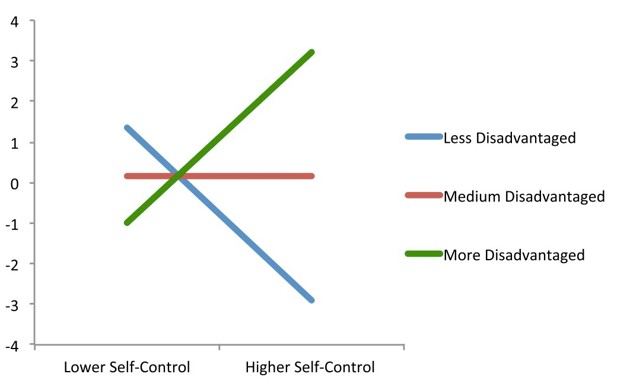
James Hamblin [ @jameshamblin ] writing in this week’s The Atlantic, provides an equally compelling and well researched argument on the Paradox of Effort. Hamblin’s excellent article highlights the research of Professor Gregory Miller and his team from Northwestern University highlighting the medical research behind what some may euphemistically call the “protestant work ethic” that underpins much of the Calvinist predilections[my term] of modern economic and social policy.
[The Paradox of Effort: Source: The Atlantic ]
We’re talking about people hardly being given a chance to pursue their goals without having to pay with their health. This is really, really important work.”
As if by design, both Agnes Török [ @AgnesTorokPoet ] and Mhairia Black [ @MhairiBlack ] appeared this week, to provide a qualitative commentary that is equally lived, researched, eloquent and authentic. Young, powerful women making genuine assessments of the structural flaws in modern, advanced economies/societies.
Wisdom beyond their years.
These are the voices of a modern civil society. They are also the voices that many would consider “subversive” or “counter”, yet ironically compliment the words of the “Old Whig”
Consider Agnes’ observations on a young person’s experience of the transition to the UK Labour market.
Worthless – Agnes Török
Also consider the United Kingdom’s youngest MP, the SNP’s Mhairi Black.
Maiden Speech – Mhairi Black -MP [UK House of Commons]
Commission for Governance
Returning to Tim Lyons’ original premise of a flawed and [at best] biased polity, no longer serving the whole, it seems prudent if not prescient to consider his contention of a “Commission for Governance“. I will certainly #vote1CommissionforGovernance
“Men are qualified for civil liberty in exact proportion to their disposition to put moral chains upon their own appetites…in proportion as they are more disposed to listen to the counsels of the wise and good, in preference to the flattery of knaves. Society cannot exist, unless a controlling power upon will and appetite be placed somewhere; and the less of it there is within, the more there must be without. It is ordained in the eternal constitution of things, that men of intemperate minds cannot be free. Their passions forge their fetters.”