

Tag: Equity

  • The other side of the Coin

    The other side of the Coin

    Miners of the cryptocurrency BITCOIN, use more electricity than 159 countries in the world.

    If it keeps increasing at this rate, Bitcoin mining will consume all the world’s electricity by February 2020.

    I might type that again.

    If it keeps increasing at this rate, Bitcoin mining will consume all the world’s electricity by February 2020.

    Think about that for a moment… [or even two]

    At this rate it would

    • Be greater than Australian electricity consumption by early 2018 ( 224 TWh)
    • Be greater than UK electricity consumption by October 2018 (309 TWh)
    • Be greater than US electricity consumption by July 2019 (3,913 TWh)

    Bitcoin Energy Consumption
    [ Source: Digiconimist ]
    There is a real “run” globally, because consider these “returns”

    Ten dollars $10  invested 7 years ago is now “worth” over $1 million That sound you may hear is people jumping on the bandwagon…

    • 2011: +1,724%
    • 2012: +170%
    • 2013: +5,838%
    • 2014: -67%
    • 2015: +37%
    • 2016: +120%
    • 2017: +701%  [Source ]

    Whilst writing this article, Bitcoin passed the $USD9000 dollar mark and has peaked a little over USD$ 9600…$BTC.X

    You may ask yourself “why do bitcoins have value“. My personal view is that any parent that has had to explain to their children why they should not give away their brand new bicycle in exchange for a “golden swap card” has some sense of the global bubble formed around bitcoin… but that is for another time.

    Bitcoin Sentiment
    [Traders Sentiment – Source: plus500.com]
    1 Bitcoin currently equals $12, 689.03 Australian Dollars. The price movements look like this.

    BitCoin Price Chart
    [ Price of Bitcoin : Source Plus500.com ]
    Ever since its inception Bitcoin’s trust-minimizing consensus has been enabled by its proof-of-work algorithm. The machines performing the “work” are consuming huge amounts of energy while doing so.

    Energy, a real commodity.

    According to Digiconomist’s Bitcoin Energy Consumption Index, as of Monday November 20th, 2017 Bitcoin’s current estimated annual electricity consumption stands at 29.05TWh.

    Consider that the country of IRELAND used 25 TWh.

    BitCoin Power Map
    [BitCoin global energy use – Source: powercompare.co.uk/ ]
    That’s the equivalent of 0.13% of total global electricity consumption. While that may not sound like a lot, it means Bitcoin mining is now using more electricity than 159 individual countries (as you can see from the map above). More than Ireland or Nigeria [ and almost all of Africa].

    Bitcoin miners use the equivalent of approximately 13% of Australia’s total energy use.

    Our island neighbour, Timor-Leste sees bitcoin miners use the equivalent of 23184% MORE electricity than their entire island nation.

    Bitcoin Power Use
    [Variation in power use | Source: https://powercompare.co.uk/bitcoin/ ]
    If Bitcoin miners were a country they’d rank 61st in the world in terms of electricity consumption.

    In 2015 we knew that with about 110,000 transactions per day works out to 1.57 US households daily usage of electricity per Bitcoin transaction. Consider that every time you buy something in Bitcoin, you could be using as much electricity as 1.57 American families do in 24 hours.

    Exponentiation anyone?

    Energy policy?

    The trends.

    • In the past month alone, Bitcoin mining electricity consumption is estimated to have increased by 29.98%
    • If it keeps increasing at this rate, Bitcoin mining will consume all the world’s electricity by February 2020.
    • Estimated annualised global mining revenues: $7.2 billion USD (£5.4 billion)
    • Estimated global mining costs: $1.5 billion USD (£1.1 billion)

    Links


  • Be Bold

    Be Bold

    International Women's Day

    Add your voice

  • The world’s Income

    The world’s Income

    The team at HowMuch.net  continue their excellent work.

    The full article can be found here.

    The Global Finance Magazine recently released an article comparing countries by income across the world for 2015, sourcing data from the World Bank. Gross National Income (GNI) per capita is the final income earned by a country’s residents divided by the total population.

    Countries are divided into 4 different groups:

    • Group 1 – Low income: $1,045 or less

    • Group 2 – Lower middle income: $1,046 to $4,125

    • Group 3 – Upper middle income: $4,126 to $12,745

    • Group 4 – High income: $12,746 or more

    Based on the data of 204 countries, below is a breakdown of the number of countries that fall within each of the 4 income groups listed above.

    • Group 1 – Low income: 17%

    • Group 2 – Lower middle income: 25%

    • Group 3 – Upper middle income: 26%

    • Group 4 – High income: 32%


    Oceania, Asia and Africa

    Oceania

    Asia

    Africa


    Source:

  • More but less…

    Links

  • Their passions forge their fetters.

    Their passions forge their fetters.

    Profound economic, social and civil changes have provoked a remarkable series of temporally cogent observations from vastly different actors this week.  This highlights the diverse yet converging, social, academic and political recognition at the heart of public-policy challenges in the 21st century.

    At the CORE of future policy and an inclusive, functioning civil society, is the recognition of the centrality of good governance.

    Tim Lyons [@picketer] writing in todays Saturday Paper has produced a masterful argument centred on the higher-order challenges for post-industrial, modern economies and has moved me to connect a series of pieces I have seen this week.

    Lyons hits the nail on the head when referencing Dr. Ken Henry’s oft-used phrase that “good governance can be a source of national competitive advantage“.

    Whilst neither Tim Lyons or Ken Henry would perhaps agree with my references to the “Old Whig”, Edmund Burke, they would, I have no doubt, forcefully concur with his observation that:

    “When bad men combine, the good must associate; else they will fall one by one, an unpitied sacrifice in a contemptible struggle.”

    As Lyons points out in his article, it is not simply a matter of illegality or corruption, but the more negative and corrosive consequences of influence, lack of transparency and confusion of “access” with “representation” that challenges modern policy to be effective beyond the few.

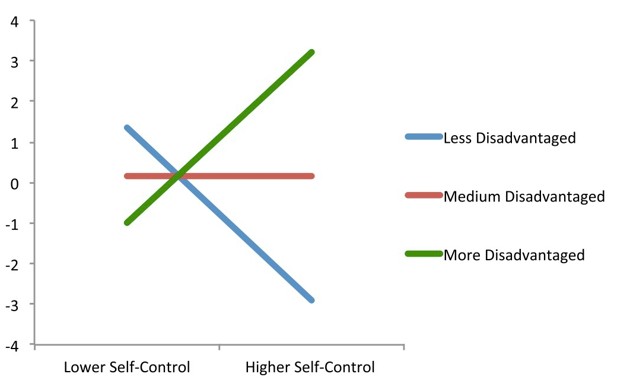
    James Hamblin [ @jameshamblin ] writing in this week’s The Atlantic, provides an equally compelling and well researched argument on the Paradox of Effort. Hamblin’s excellent article highlights the research of Professor Gregory Miller and his team from Northwestern University highlighting the medical research behind what some may euphemistically call the “protestant work ethic” that underpins much of the Calvinist predilections [my term] of modern economic and social policy.

    Age Acceleration
    [The Paradox of Effort: Source: The Atlantic ]

    We’re talking about people hardly being given a chance to pursue their goals without having to pay with their health. This is really, really important work.”

    As if by design, both Agnes Török [ @AgnesTorokPoet ] and Mhairia Black [ @MhairiBlack ] appeared this week, to provide a qualitative commentary that is equally lived, researched, eloquent and authentic. Young, powerful women making genuine assessments of the structural flaws in modern, advanced economies/societies.

    Wisdom beyond their years.

    These are the voices of a modern civil society. They are also the voices that many would consider “subversive” or “counter”, yet ironically compliment the words of the “Old Whig”

    Consider Agnes’ observations on a young person’s experience of the transition to the UK Labour market.

    Worthless – Agnes Török


    Also consider the United Kingdom’s youngest MP, the SNP’s Mhairi Black.

    Maiden Speech – Mhairi Black -MP [UK House of Commons]


    Commission for Governance

    Returning to Tim Lyons’ original premise of a flawed and [at best] biased polity, no longer serving the whole, it seems prudent if not prescient to consider his contention of a “Commission for Governance“. I will certainly #vote1CommissionforGovernance

    “Men are qualified for civil liberty in exact proportion to their disposition to put moral chains upon their own appetites…in proportion as they are more disposed to listen to the counsels of the wise and good, in preference to the flattery of knaves. Society cannot exist, unless a controlling power upon will and appetite be placed somewhere; and the less of it there is within, the more there must be without. It is ordained in the eternal constitution of things, that men of intemperate minds cannot be free. Their passions forge their fetters.”

    – Edmund Burke

  • Representation

    Two variations-on-a-theme:

    The first comes from our own Clarke & Dawe. Corey Doctorow reminded me of this earlier in the week.

    The debt crisis in 2010


    The second comes from US Senator Elizabeth Warren [ @SenWarren ] speaking at the Re/code conference this past Tuesday.  During a question and answer session, a voter asked why politicians aren’t building infrastructure or implementing other policy that respects the will of the people.

    Her succinct response and treatise on democratic representation and public policy stasis…

    Washington and Representation

    Perhaps Nick Hanauer [ @NickHanauer ] was really on to something?

    Links:

  • Harsh Reality..The World is Better!

    Confirmation bias, idealogical/doctrinaire policy “imperatives” or good-old special interests are all part of what contributes to our sense of progress in the human condition.

    Max Roser is a James Martin Fellow researching income inequality and inclusive growth at the Institute for New Economic Thinking, Oxford Martin School. Roser asks the question:

    Is it actually true that we are building a better world? Or are those who claim that things are always getting worse the ones in the right? Whether we’re discussing the way of the world over a pint in the pub or dissecting the issues at an academic conference, it’s a topic that lingers constantly: how is the world changing?

    Roser points out in a series of research that:

    • incomes are growing in all parts of the world,
    • world poverty is declining rapidly
    • and that the poorest countries now have the highest growth!
    Human Development – Source: Max Roser via Prados de la Escosura (2014)
    [ Human Development – Source: Max Roser via Prados de la Escosura (2014) – CC BY-SA License

    Roser’s response in unequivocal.

    The answers to my initial questions are very clear. The evidence shows that we are becoming less violent and increasingly more tolerant, that we are leading healthier lives, are better fed, and that poverty around the world is declining rapidly. Taking these facts into account paints a very positive picture of how the world is changing.

    Links

  • The Pride of Broadford

    Words and Actions…. A rare commodity..

    I was privileged to attend the Broadford Secondary College awards night [ last night, December 18th] and witness the launch of the Delaney Family Endowment for Year 12 students studying at Broadford Secondary College. This is a $20,000 Endowment in perpetuity.

    How simply the policy challenges facing the nation can be distilled in to an eloquent and most generous commitment by a family that simply wishes to see everyone have the opportunity to achieve, regardless of their personal circumstances.

    Such a genuine, humble and heartfelt commitment to an entire community will, I know, have an impact for many, many generations to come. This is philanthropy in its truest form.

    What a wonderful example for all communities and policy makers.