
Tag: Apple

  • Data Industrial Complex

    Data Industrial Complex

    Is tech any different? Its all in the cloud! Cheaper is better, yeah?

    The concept of personal sovereignty versus ubiquitous personal technology is clearly something that motivates Apple CEO Tim Cook . Speaking at the 40th Annual International Conference of Data Protection and Privacy Commissioners in Brussels last week.

    The conference theme was “Debating Ethics: Dignity and Respect in Data Driven Life”.

    Cook is the first tech CEO to serve as the keynote speaker for the conference and was invited to speak.

    Links

  • 10 Years

    10 Years

    Innovation, creativity, productivity, ubiquity.

    Perhaps best defined by events that occurred ten years ago today.

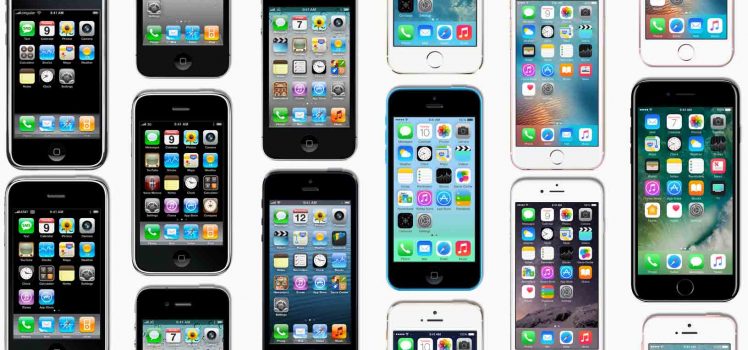
    A single decade, a BILLION + units, 13 models, 395 sold every minute, 101 million users in the US alone,

    Still hard to fathom…

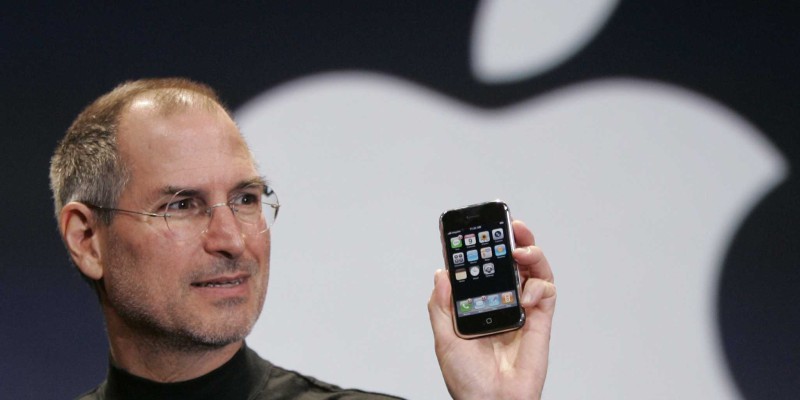
    Steve Jobs and Apple launched the iPhone on January 9th 2007.

    Steve JObs - iPhone Launch
    [ Steve Jobs iPhone Launch January 9th 207 ]
    As Apple says:

    At Macworld 2007 in San Francisco, Steve Jobs introduced the world to iPhone as three products in one — “a widescreen iPod with touch controls, a revolutionary mobile phone and a breakthrough internet communications device.” In the ten years since, iPhone has enriched the lives of people around the world with over one billion units sold. It quickly grew into a revolutionary platform for hardware, software and services integration, and inspired new products, including iPad and Apple Watch, along with millions of apps that have become essential to people’s daily lives.

    Links


  • LIAM

    LIAM

    Part of the problem or part of the solution?

    Things really have improved. Perfect? Not by a long-shot.

    Could you imagine the largest manufacturer in the world, even a decade ago, investing capital and recurrent resources in this level of innovation to recycle the products they produce?

    http://www.apple.com/recycling/

    The cynical amongst us [I count myself as one] have always looked closely [and with scepticism ] at the “triple-bottom-line” commitments of manufacturers.

    There is, however, a new breed of steel-bending industrialists [who also works in silicon] and they genuinely view the entire product cycle as their responsibility. Yes, labour laws and working conditions are not to be ignored…

    Apple leads this global group, with examples such as their 2015 Environmental Responsibility Report.

    Greenpeace Report
    [Source: #clickclean GreenPeace Report ]
    As recently as 2012, according to Greenpeace, Apple used 55% coal at the time to power many operations. By 2014, Greenpeace was praising the company as the most aggressive and innovative in Silicon Valley. In its most recent report, Apple scored 100% on Greenpeace’s green index.

    Apple’s own report shows:

    Apple Environment


    The wars of the twenty-first century

    I recall the words of the head of the United Nations Environment Program [UNEP], Dr. Noel J. Brown, when a guest of ours in Broadford, in the early 1990’s, speaking to a group of students and community leaders. He said:

    …the wars of the twenty-first century may well be fought over access to and the cost of water

    Perhaps prescient.

    The importance of renewable energy sources and the central role of “full-cycle” product management was clear to him twenty-five years ago. It only appears now, even with the level of controversy and debate over global warming and long-term energy solutions still raging, that a new breed of industrialist is taking matters in to their own hands and “walking the talk”.

    “LIAM” is simply another example of the paradigm shift occurring in plain sight.

    Links

  • The Golden Age of Surveillance

    The Golden Age of Surveillance

    Complicated? Yes.

    The struggle between the American FBI and Apple intensifies as a new court date approaches [March 22nd]

    The words of Louis Brandeis, an American Supreme Court Judge are worthy of note.

    The quote above [from a wiretapping case] Olmstead v. United States, 277 U.S. 438, 479 (1928) is perhaps more relevant today than ever.

    Ironically, the last sentence is one of many quotations inscribed on Cox Corridor II, a first floor House corridor, U.S. Capitol.


    Links


  • Sam, Apple and that Phone

    Sam, Apple and that Phone

    The ” FBI vs Apple ” debate may seem a somewhat esoteric debate to many, but at the very core of this [ no pun intended ] is the basis of free and open societies. No this is not an exaggeration.

    National Security professionals take note. Law-makers take note. Every phone-owner take note.

    Recently, Sam Harris, a commentator I greatly admire for his reasoned and always challenging analysis of major global issues, took the forcefully opposing view in the Apple v FBI debate.

    Whilst very well-reasoned and convincing, I simply could not agree and felt even someone as genuinely erudite as Harris was overlooking the “grammar of the medium” in this pivotal debate. I also felt his risk assessment under-estimated the loss to the individual and the implications for the future of what we understand open societies require to function [free and open communication].

    The nature of digital technology and modern communications makes the “analogue” counter-arguments he was making less relevant in my view. An ethical/moral response to this requires consideration of the paradigm shift that has occurred in the last five years with ubiquitous, personal encryption.  This is the game-changer.

    Given the rise of global threats and the seeming rise of increasingly authoritarian responses [not least that demonstrated in some of the US Presidential debates and even within Australian political debate]  by many otherwise open and/or plural societies, this issue has major and perhaps irreversible long-term consequences for the security and openness of “free/democratic” societies.

    These really are the stakes in my view.

    The #KeepitlockedTim sentiment is simple, but the implications are profound.

    I know Apple agrees. Recently, Apple Vice President for software Engineering, Craig Federighi provided further details on Apple’s view.

    Notably, Zeid Ra’ad Al Hussein, high commissioner for human rights at the United Nations, has warned that a “Pandora’s box” will be opened if Apple co-operates with the FBI.

    Unsurprisingly however, Sam Harris has once again demonstrated how a reasoned and thoughtful individual can entertain opposing views, rationally consider evidence as it changes and refine or even reverse one’s opinions, based on new understandings.

    His most recent podcast, Waking Up with Sam Harris, – Inside the Crucible: Syria and the Islamic State, details [in a short update] his ongoing consideration and analysis of this issue. He references further feedback he has received from a Google engineer and the eloquent and compelling opposition he has to Harris’ position.

    This short reflection by Harris is very worthy of your time. Not because he has aligned with a position I hold, but the way in which he arrives at his reshaped view. This is a genuine intellectual and reasoned-thinker at work.

    You can play the excerpted reflection from the link at the beginning of this post.

    You can listen to the full episode of the Waking Up with Sam Harris podcast here:

    [soundcloud url=”https://api.soundcloud.com/tracks/250503247″ params=”color=ff5500″ width=”100%” height=”166″ iframe=”true” /]

    Interestingly, Harris also references the position of former NSA and CIA Chief, General Michael Hayden [the only person to ever head both organisations], who said in mid-February 2016

    Even when you’re just looking at this through a security lens, that’s actually not the best resolution for American security. Put another way America is more secure — America is more safe — with unbreakable end-to-end encryption,

    Also worthy of note is the position taken by the Chertoff Group,

    We conclude that an extraordinary access requirement is likely to have a negative impact on technological development, the United States’ international standing, and the competitiveness of the U.S. economy and will have adverse long-term effects on the security, privacy, and civil liberties of citizens.


    Compelling.

    #KeepitlockedTim


    Links:

  • This is why Steve picked Tim

    This is why Steve picked Tim

    It begins…

    In essence, Tim Cook states:

    The implications of the government’s demands are chilling. If the government can use the All Writs Act to make it easier to unlock your iPhone, it would have the power to reach into anyone’s device to capture their data. The government could extend this breach of privacy and demand that Apple build surveillance software to intercept your messages, access your health records or financial data, track your location, or even access your phone’s microphone or camera without your knowledge.

    Links

  • Culture + Innovation + Success: Repeat

    Culture + Innovation + Success: Repeat

    60 Minutes USA looks at Apple Computer, the world’s largest Company [for the third year].

    Insights in to design, innovation and modern business practices, including labour-practices, skills and education.  Yes the tax questions were asked.

    Encryption is worth considering.  #keepitlockedtim

    What’s next for Apple?


  • Picking a winner

    Picking a winner

    The nature of true innovation is such that any unique activity is at once, both ignored as irrelevant and recognised [by some] as the future

    The difficult part is knowing which one…

    We know what we are, but know not what we may be.

    William Shakespeare

    Given current policy debates regarding “industries of the future” and the need to be “agile” and “innovative”, it is instructive to consider our own cognitive biases when it comes to change, reform and innovation. Consider public policy debates of energy futures and global warming.

    Thanks to The Atlantic for highlighting the work of  the tech website BGR when they unearthed a comment thread from 2007 that originally appeared on the website Engadget, and was preserved by the Internet Archive.

    The conversation is focused on the brand new iPhone, which had just been unveiled.

    For those of you that can remember rotary dial phones, communication prior to the internet and those that euphemistically consider themselves well-read [at least when there were identifiable canons that one could digest in a life-time ] the prospect of the technological and behavioural change that occurred on the release of the “iPhone” is nothing short of profound.

    Phone
    [Rotary Dial Phone]
    Just eight years ago. The concept of “generational change” has perhaps been compressed to “decadal” or something even more finely temporal.

    How we react to change, how we identify the new through the frameworks of the past are increasingly challenges of modern, highly technical societies.

    Consider these humorous, prophetic and simply wrong reviews of the newly unveiled iPhone and consider our current notions of “innovation”.

    1. “Apparently none of you guys realize how bad of an idea a touch-screen is on a phone. I foresee some pretty obvious and pretty major problems here. I’ll be keeping my Samsung A707, thanks… Color me massively disappointed.”
    2. “Touch screen buttons? BAD idea. This thing will never work.”
    3. “I say get on the train, or get run over by it.”
    4. “No freaking way, Apple! It’s over!”
    5. “Well, it beats the hell outta my Nokia 6030”
    6. “Steve…where is my FM radio?”
    7. “OMG, its the Newton reborn!”
    8. “no qwerty keyboard? ojhsdodsagfadhjldgs!!”
    9. “This looks like a disgusting bastard child of iPod/Cellphone/PDA. Yes it’s shiny, but I’m sure it won’t be so shiny once you touch it.”
    10. “5 hour battery life!!!!!!!!!!!!!!!!!!!! ARE YOU KIDDING ME THIS IS A JOKE ITS A PHONE NOT A LAPTOP”
    11. “DAMN! If you think it’s big, look at the picture with Steve holding it close up, its like a Razr! Wifi! Everything, good BYE every phone company in the world.”
    12. “Im not impressed with the iPhone. As a PDA user and a Windows Mobile user, this thing has nothing on my phone… No thanks Apple. Make a real PDA please.”
    13. “I mean it looks pretty but its not something i foresee being the next ipod for the phone industry…It took apple how long to develop this ONE PHONE, samsung and motorola release new phones every few months lol, and constantly innovates and gets better, im sorry but if im sending text messages i’d rather have my thumb keyboard than some weird finger tapping on a screen crap.”
    14. “These comments remind me of the folks who thought the original iPod didn’t stand a chance.”
    15. “Blackberry is DEAD. And so is every other poorly designed idiot phone and plastic PDA. Thank God. R.I.P. Blackberry. R.I.P. Palm. R.I.P. Treo.”
    16. “That sound I just heard was everybody’s head exploding.”
    17. “Good bye Zune.”

    Hindsight…

    Links


  • What the experts KNOW

    The notion of originality, innovation and the oft-used “paradigm-shift” challenges all of us.

    None more-so than the “experts” within an industry. Not unlike those Generals and the last war… or those Teachers that have “seen it all before”

    As we move in to the “Apple rumour season”, It seems appropriate to look back at some expert reviews and consider what value and meaning “expert analysis” and “market responses” have within the life-cycle of any innovation..  I know what Steve would have said……

    The iPhone

    “Apple will sell a few to its fans, but the iPhone won’t make a long-term mark on the industry.” – Matthew Lynn, Columnist at Bloomberg   [Ouch – Ed]


    “This is not a great phone. It’s an interesting design.” – Rob Enderle, Analyst with the Enderle Group


    “That virtual keyboard will be about as useful for tapping out emails and text messages as a rotary phone. Don’t be surprised if a sizable contingent of iPhone buyers express some remorse at ditching their BlackBerry when they spend an extra hour each day pumping out emails on the road.” – Seth Porges, CrunchGear


    “I’m more convinced than ever that, after an initial frenzy of publicity and sales to early adopters, iPhone sales will be unspectacular.” – David Haskin, Computerworld
    “Implementing a cellphone is absolutely more difficult than anything Apple’s done to date. Go out and buy an iPod and hold it at waist level and drop it. That’s the end of the iPod. I don’t think Apple’s going to be a big player in this at all.” – Edward Snyder, Analyst with Charter Equity Research
    “There is no reason to have an 8GB iPod on the phone. Give us a 2GB capacity so we can put our favorite stuff on it and listen when we want, cut the price to $299 and you may have something.” – Todd Sullivan, Seeking Alpha


    “[The iPhone] will have very little impact on the business community.” – Avi Greengart, Analyst with Current Analysis


    “Sales for the phone will skyrocket initially. However, things will calm down, and the Apple phone will take its place on the shelves with the random video cameras, cell phones, wireless routers and other would-be hits.” – Michael Kanellos, Editor at CNET

    [Source: TUAW]