
Tag: Black Saturday

  • Six Years

    Six Years

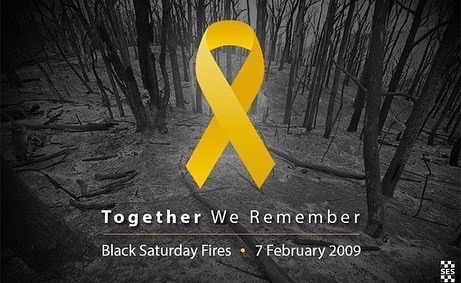
    Two thousand one hundred and ninety one days ago [2191.45] , what we euphemistically refer to as “Black Saturday” was well underway.

    I wrote this piece a few days ago, on Saturday the 7th, [today] My website will publish this for me..I will be planting and watering some more trees at our new home.

    My father used to say to me…

    ..planting trees is making shade for your grand-children

    David J. Morris, writing in Salon this week, captured and expressed his life experiences in such a way I felt compelled to write down his words, just so, I too, can revisit these words in years to come.

    Wisdom and experience seem to be the next stage for him. For me, change is still present.

    Family and close friends – connections to the world, are the difference. Of this I have no doubt.

    David observed:

    We are born in debt, owing the world a death. This is the shadow that darkens every cradle. Trauma is what happens when you catch a surprise glimpse of that darkness, the coming annihilation not only of the body and the mind but also, seemingly, of the world. Trauma is the savagery of the universe made manifest within us, and it destroys not only the integrity of consciousness, the myth of self-mastery, and the experience of time but also our ability to live peacefully with others, almost as if it were a virus, a pathogen content to do nothing besides replicate itself in the world, over and over, until only it remains.

    This is not, however,  a dark or nihilistic [in the negative sense at least] concatenations of anger or bile, it is simply human experience writ large [and in my view] so very eloquently.

    The timing of Morris’ words, coming as a settlement was reached in the Victorian Supreme Court for the survivors  of the 2009 Marys­ville blaze known as the ‘Murrindindi Class-Action’.

    This agreement takes the total compensation bill for the Black Saturday fires to almost $1 billion.

    As a member of the Kilmore-East Class Action, I am all too aware of the challenges and next steps for our neighbours in Murrindindi.

    Morris concludes with sage advice:

    There are so many ways to think about PTSD. As a construct, it touches on so many things, but the most important of these might reside in the simple meaning of the first letter of its formal name, the P. The loss, the insight, the fragmentation, the moral vertigo, all of these things only happen post-, after The Event has come and gone and we discover to our shock and surprise that we are not who we used to be. It is perhaps a facile thing to say, but it seems to me that the first duty of every survivor is to simply acknowledge the existence of trauma, to accept that there are things in this world that can break us. Only then can we begin to make meaning out of everything that comes after.

  • Bushfire Class Action Settlement

    A coincidence.

    Mitchell Shire Bushfire Memorial
    Mitchell Shire Bushfire Memorial

    Just yesterday I noted with some reflection and sadness, the elegant and appropriately under-stated Mitchell Shire Community Bushfire Memorial in Broadford.

    A wonderful topographic representation of  the path and extent of the fires within the Shire.

    It has been well over five years since we lost our home and possessions in the fires of 2009. The chaos, disruption and loss experienced by so many, still lingers deeply for those that experienced February 7th 2009.

    We have been in our new home for just on 12 months. A journey that continues still, but at least one that we could undertake as a family. Many did not get that chance.

    A coincidence.

    The week and day that the Mitchell Shire Community Bushfire Memorial is completed and unveiled, is also the week that it appears [if approved] there will be a settlement in the Kilmore East Bushfire Class Action.

    Mitchell Shire Community Bushfire Memorial
    Mitchell Shire Community Bushfire Memorial

    In what will be the largest class action settlement in Australian history if the court approves it, Maurice Blackburn Lawyers announced today, 15 July 2014 that it had secured agreement from the defendants to pay a settlement of nearly half a billion dollars.

    Of course, in matters such as these, the defendant’s settlement is in the context of admitting no liability. Lightning, is the culprit, says the defendant.

    Equally assured, the eminently capable Andrew Watson [Head of Class Actions at Maurice Blackburn] disputed this interpretation, suggesting….

    “A lightning strike caused this fire in the same way that the formation of the sun created human life on earth,”

    The course and ultimate meaning of this long-running case will be for others to ascertain and debate in the months and years to come.

    If this settlement is approved, it will signal [perhaps] some closure for those that sought recourse for harm done, although all those directly involved understand the true nature of the events they experienced will be with them for ever.

    Mitchell Shire Community Bushfire Memorial

    The question, “have we lived long enough” was posed in 1939 and again by Professor Tom Griffiths [from the ANU] who wrote an article titled ” We still have not lived long enough”.

    It remains to be seen if the social, environmental and economic lessons of 2009 will inform our future lives.

    ” What connexion can there have been between many people in the innumerable histories of this world, who, from opposite sides of great gulfs, have, nevertheless, been very curiously brought together!”

    Charles Dickens – Bleak House

    Links:


  • I was free before – by Grace

    My daughter also has some views on today and what this means for her, five years on.


    Links


  • Five Years On.. The Qualitative

    Reflection begins.

    This is another personal [but public] journal entry to mark the day.

    Five years after “Black Saturday” we have a house that we plan to be in the following Christmas.

    I am not sure I fully appreciated the importance of walls and roof until the permanence of those walls and roof were questioned.

    We moved in to our new house in June 2013. We spent our first Christmas in our new house. I doubt the builders and architects will ever really understand what this means to us.

    A few close friends shared Birthdays and the New Year with us. Words fail..

    Five years. Thats 260 weeks. 1825 days. That’s the quantitative.  In my post  at this time last year, I wondered aloud if my thoughts would ever turn to the qualitative.  I think they have.

    Counting the numbers, signing the forms, changing jobs, starting a business, awaiting decisions, petitioning politicians, managing finances, moving, planning, moving again, buying, moving again, building, moving again… all this can consume more than one life-time and often has..

    The quantitative…. A Kelpie can help change that.

    We moved in to our new house in June of 2013. It is a beautiful house. Warm or cool when needed. Insulated, efficient, environmental, protected and protecting, sitting gently on the landscape. Timber, Tin and Stone.

    In December of 2013, a pure-breed Australian Kelpie joined my family. A strange little thing happened.. A  new house started to feel like home to all of us. For me, it was the first time in almost five years [252 weeks or 1764 days to be precise], that the past gave way to the present.

    It is from the present that one perhaps thinks of the future….

    On February 7th 2009, our family dog did not make it out of the house with me. In December 2013, we had a new Kelpie. Our family and “red-dogs” have a long association.

    I think this may be the beginning of one such association….A long one..

    red dog
    A Red Dog

    The Odyssey continues…

    Links:

  • Kilmore East Class Action

    The Kilmore East Bushfire Class action started today in the Victorian Supreme Court.

    Such eloquent sadness.

    20130304-130623.jpg
    Links

    Maurice Blackburn
    Supreme Court

  • Four Years On – The Quantitative & Qualitative

    The odyssey continues.

    It is four years since the fires that began on February 7th 2009. This is a personal [but public] journal entry to mark the day.

    We have yet to settle in a new home although we are [finally] very close. We have had five homes [accommodation] in this four year period.

    Snow at Clonbinane July 2008
    Snow

    I still marvel at the fact that it was snowing at our home in Clonbinane just six months prior to the Black Saturday bushfires.

    The contrast still seems incredible to me.

    As life moves on and recovery continues, raw-ness fades and some equilibrium returns.

    A natural but time-and-energy consuming process.

    The process is just that, a process.

    As anniversaries arrive, numbers seem to be important to many.

    The quantitative.

    • 173 people died, Australia’s highest ever loss of life from a bushfire
    • 414 were injured as a result of the fires.
    • 2,030 houses were destroyed and more than 3,500 structures
    • 450,000 ha (1,100,000 acres) burnt
    • 7,562 people were displaced
    • 43 °C (109 °F) three consecutive days prior to the fires, saw Melbourne break heat records
    • The temperature peaking at 45.1 °C (113.2 °F) on 30 January, the third hottest day in the city’s history.
    • 46 degrees Celsius (115 °F) were recorded on February 7th and northwesterly winds were over 100 km/h (62 mph)
    • 120 km/h (75 mph) gale-force southwesterly winds came with a wind change, creating even larger fire fronts. This wind change almost took my life.
    • 900 to 1300 degrees Celsius – Is the range of temperatures that engineers told me I experienced at our hilltop home.
    • My family lost all their possessions, along with the possessions of both Grandparents.
    • Soil burned – [The Australian]

    Those that experienced the day, sit with their personal experiences and memories, the qualitative.

    The qualitative.

    We lived in a beautiful part of Victoria, Clonbinane. We often referred to our home as living above a “valley of clouds”. Our children were born and raised amongst the gums.

    Clonbinane Valley
    Valley of Cloud


    The fires destroyed our home and possessions and changed our lives. Often we are asked if things are “better” or “worse”. I think my answer is “changed”

    Fire at Clonbinane
    Fire

    The fire almost took my life. Our family dog was with me. He did not survive.

    My family lost their home and pet and almost lost a father and husband.

    I learnt my wife and family are incredibly strong and resilient people.

    We felt the support of the entire Broadford Community.

    My children made new friends and grew and thrived through adversity.

    Work and career changed dramatically.

    A journey for a new home began, struggled and then ultimately a chapter had to be closed,

    BAL, FlameZone, engineers, Government .

    Cleared Clonbinane
    Cleared & Gone


    The search for a new home takes many years. It did.

    Timber and Tin
    Timber & Tin

    A smaller property, another close community, a new home and builders that care about quality are all recipes for a positive future.

    Lets hope the fifth entry in this journal is more about the qualitative and less about the quantitative.


  • Have we lived long enough?

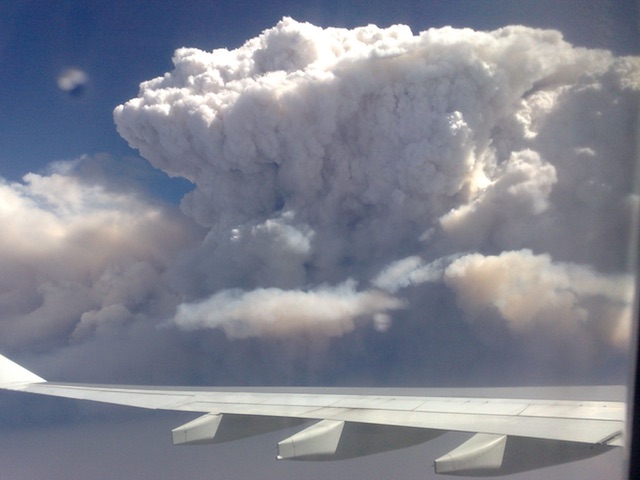
    Bushfire Sun
    Saturday Feb 7th 2009

    Three years ago today, I witnessed first-hand, the unrelenting and profoundly destructive force of the fires that created Australia’s worst natural disaster in recorded history.

    The fires that began on February 7th 2009 “Black Saturday” took many lives, destroyed many homes and buildings and most certainly altered the psyche of many that I know, including me.

    1000 plus degrees is not something that I have yet to really comprehend.

    It is beyond human comprehension and perception, at least in my mind.

    My family’s home, my children’s possession’s, their pet dog, were all “lost” in the fires. “Lost” is a strange adjective to use, but it seems less dramatic than evaporate. I thought only liquid evaporated…

    Liquid Metal
    My liquified roof – 2009

    Being caught in an inferno is something that I still contend with most days. We all move on, perhaps in different directions and certainly with altered purpose, yet I often ponder the obscene luck of some [myself] and sadly the lack of the same obscene luck that mean’t others perished.

    A few weeks after the fires in 2009, Professor Tom Griffiths [from the ANU] wrote an article titled ” We still have not lived long enough”. This really struck a chord with me. In this piece, he postulated…do we learn from history?

    Professor Griffiths wrote of the 1939 “Black Friday” fires and the Royal Commission of Judge Leonard Stretton. The judge used the phrase “they had not lived long enough”,  describing the horrible collision between an ancient natural cycle [bushfires] and relatively new european immigrants coming to grips with these events. These were events that my parents were alive to see. I am aware of many older people who still talk about the “fires of ’39”. I know myself that the 1983 fires -“Ash Wednesday” are discussed in a similar vein.

    My father was born amongst the Red Gums, an association that my family has had for about 150 years. Even after recovering a few months after the events of February 2009, I spoke with an older [and much wiser] family member who had lived most of his life [and most of the 20th century] in the southern Riverina bush of New South Wales, amongst the red gums.  His wise words on first greeting me were both full of caring accusation and somewhat incredulous..

    “What ? Didn’t you see it coming?” .

    I stopped and thought for a moment, then realised, the answer was yes, I did. That surprised me…

    Bushfire Chimney
    Chimney

    Professor Griffiths too, asked the simple yet profound question, do we learn from history? He answered his own question, suggesting the evidence suggested that we do not….

    Those reading this that know what happened in Marysville during the fires, will shudder to read an excerpt from the 1939 Royal Commission..

     “[Question:] Could anything be done to make Marysville safe against fire from the west?

    [Answer:] — No. On Sunday night we were burning and all day Monday I had a big body of men on the western end of the township cutting and burning breaks. On Monday the fire jumped over everything we had done.”

    The work of Museum Victoria’s Bushfire Collection, amongst many others, may help to correct earlier lapses of our collective memory. More support for such endeavours is certainly needed.

    Three years [or seventy years] on, I think individuals and communities have learned much, yet I also fear that collectively we have allowed the opportunity for generational [cultural] change, to fade a little too quickly…The very same challenge that Professor Griffith’s suggests occurred to those who experienced the 1939 fires may be occurring today.

    We most certainly cared for the survivors and victims of the 2009 fires far better and more deeply than perhaps at any other time in our history. That may still not be enough? Having been a recipient of such overwhelming concern and support, provided often by strangers, assures me that Australian’s have definitely learnt much.  It was what we do from this point on that will be the test of Professor Griffith’s thesis.

    We began building a new home in the last month, three years after the event. Time, energy, emotions, life, work, regulation, bureaucracy, family – all must be catered for during what is euphemistically called the recovery period.

    Many still are effectively living as environmental refugees. Unable to return, not willing

    Bushfire Dust
    February 2009

    or simply prevented from returning to where they lived, parts of our landscape being assessed as no longer viable given the potential for such disaster. I have travelled widely, the Australian bush is where I choose to live. The reality of the environmental and population changes occurring over time present challenges anew for us all.

    The larger scale opportunities for cultural change, planning, environmental, economic and social policy [unique to this corner of Australia] that comes with co-ordinated community and government action, at all levels, remains to be seen.

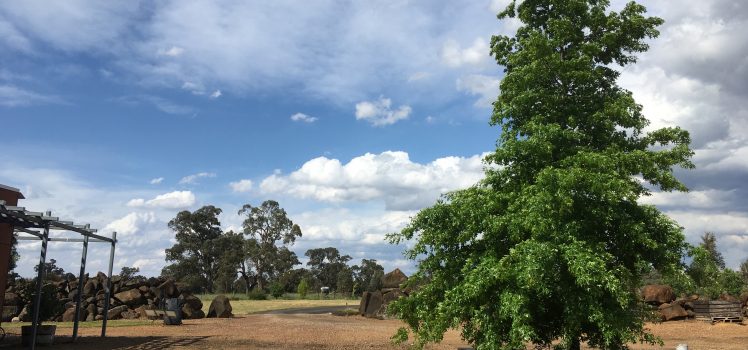
    Red Gum
    Redgum 2012

    We still seem to struggle with the “big-picture” opportunities and the genuine leadership required to unite communities and the nation.

    Energy infrastructure, telecommunications, building codes, social planning, at least to my eye, have not been coordinated or integrated in ways that I thought may have been possible in the weeks and months after the fires.

    The cultural response is our greatest challenge.

    Let’s hope we have lived long enough this time.


    Links.