
Category: Space

  • Perseverance

    Perseverance

    MARS

    Links

    • NASA JPL
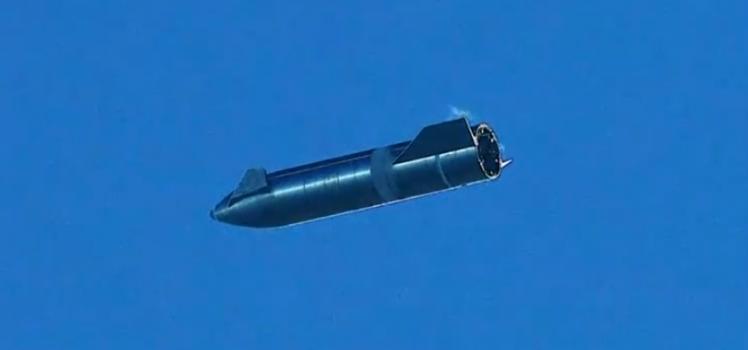
  • SN8 – It flew!

    SN8 – It flew!

    …the landing needs a little work!

    Links

  • 17 Seconds

    17 Seconds

    50 Years ago today. Spend a moment and consider the scale of this human endeavour.

    • Neil Armstrong, Commander
    • Edwin E. Aldrin Jr., Lunar Module Pilot
    • Michael Collins, Command Module Pilot


    Links


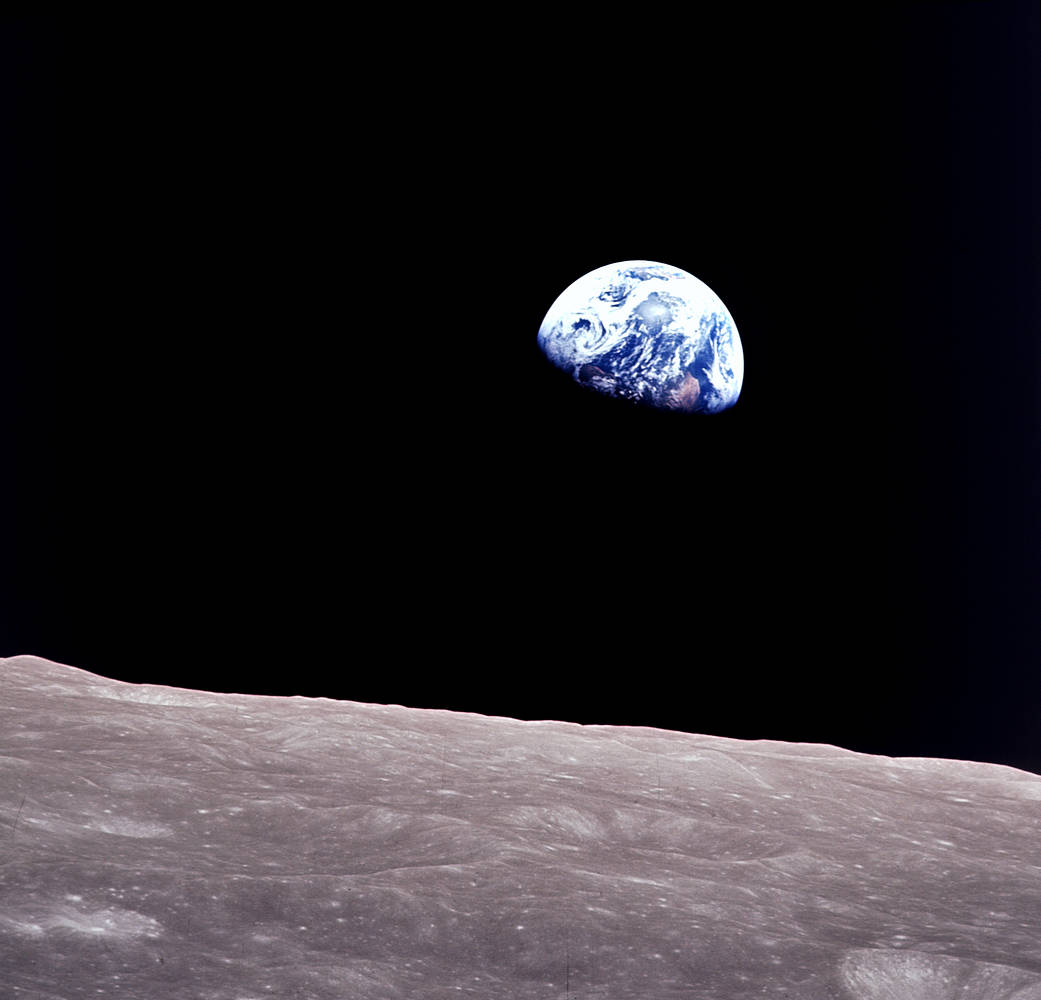
  • Earthrise – 50 years

    Earthrise – 50 years

    Seems like yesterday.

    EarthRise
    [Earthrise – Apollo 8 24tth December 1968]

    The far side.

    69 hours, 8 minutes and 16 seconds after launch, the crew reached the far side of the Moon. They burned their engines for a lunar orbit insertion (LOI), which lasted four minutes. The burn slowed the spacecraft down so it could be captured by the Moon’s gravitational pull, making it the first ever manned satellite of another world.

    The Moon is tidally locked to Earth, which means it rotates on its axis at the exact same rate that it orbits Earth. As a result, we only see one side of the Moon from Earth’s surface. Borman, Lovell and Anders were the first to see the far side…

    Lovell described it during a live telecast as,

    “essentially gray, no color…like Plaster of Paris or some sort of grayish beach sand.”

    The Far side
    [The far side of the Moon – Apollo 8 – 1968]

    Links

  • Stellar… Just Interstellar

    Stellar… Just Interstellar

    For the second time in history, a human-made object has reached the space between the stars. NASA’s Voyager 2 probe now has exited the heliosphere – the protective bubble of particles and magnetic fields created by the Sun.

    [JPL/Caltech]
    [Voyager 2 Heliopause – JPL/CalTech]
    Both spacecraft carry with them a 12-inch (30 cm) golden phonograph record that contains pictures and sounds of Earth, along with symbolic directions on the cover for playing the record and data detailing the location of Earth.[1][18] The record is intended as a combination of a time capsule and an interstellar message to any civilization, alien or far-future human, that may recover either of the Voyagers. The contents of this record were selected by a committee that included Timothy Ferris[18] and was chaired by Carl Sagan.

  • because he can…

    because he can…

    Quite simply, because he can.

    In an age of “likes”, “friends”, virtual business, “disruption” and automation, it appears there is still room for the genuine steel-bending industrialist with a bold vision, committed to building real assets with genuine ingenuity and innovation.

    Well done Elon.

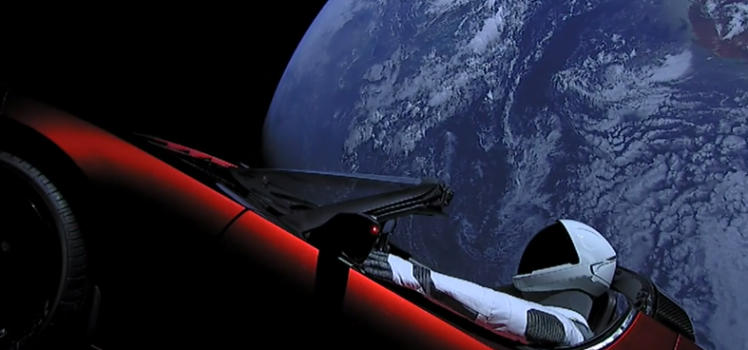
    Did I mention there is a Red Tesla Roadster also currently in orbit, overhead, Perth Western Australia?

    SpaceX’s big new rocket blasted off on its first test flight, carrying a red sports car aiming for an endless road trip past Mars.


    The Falcon Heavy rose from the same launch pad used by NASA nearly 50 years ago to send men to the moon.

    With lift-off, the Heavy became the most powerful rocket in use today, doubling the lift-off capability of its closest competitor.

    Links


    Men admire the man who can organize their wishes and thoughts in stone and wood and steel and brass.
    – Ralph Waldo Emerson
  • The Star that lit the Universe

    The Star that lit the Universe

    Consider the pursuit and acquisition of knowledge.

    Ninety-four years ago today, the modern universe “appeared”

    When my father was born in 1916, the world still maintained a Copernican understanding of our galaxy. In essence, the conventional wisdom was that the universe was made up of just one galaxy – our own Milky Way galaxy.

    By 1923, [virtually overnight, our entire perception of the universe changed]. The discovery of a single star heralded our modern understanding of the universe!

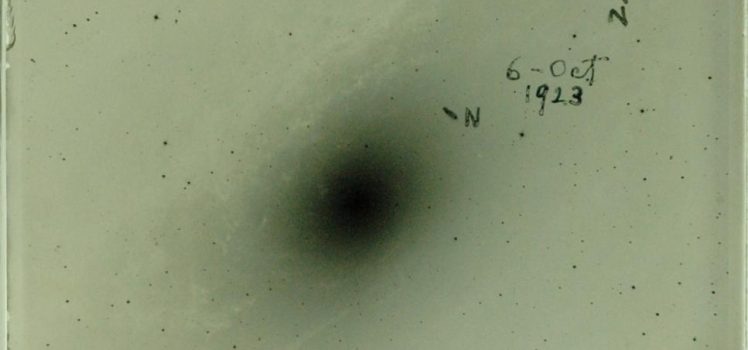
    On October 5, 1923, Edwin Hubble discovered a Cepheid variable star in what was then known as the Andromeda Nebula.

    Hubble Var1
    [Var! – Edwin Hubble | Source Carnegie Observatories ]
     

    So by the time my mother was born in 1925, the Universe went from a single [Milky Way] Galaxy, to literally hundred of Millions…

    Hubble determined that this object was 1 million light-years away, more than three times the then-calculated Milky Way diameter. (Better measurements today put Andromeda at more than 2 million light-years away.)

    Hubble Deep Field

    Hubble Deep Field
    [Source: 2004 NASA Hubble Deep Field ]

    Links

    SaveSave

    SaveSave

    SaveSave

  • Two Years On…

    Two Years On…

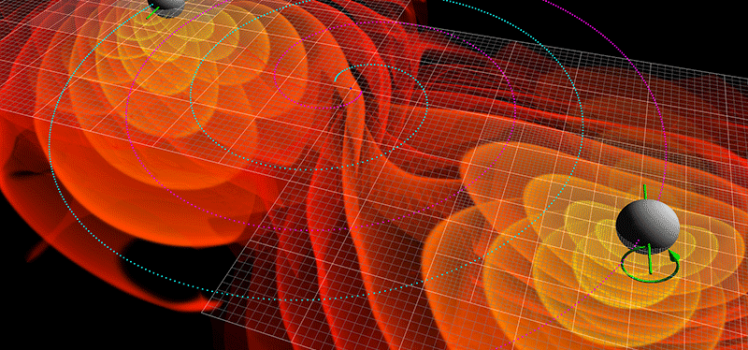
    It’s two years since Einstein was once again proven to earn the moniker of ‘genius’. Consider his theorems are now over a century old and they are still being tested and confirmed to remarkable precision.

    At 5:51am [EST ] on the 14th of September 2015, the twin Laser Interferometer Gravitational-wave Observatory (LIGO) detectors , located in Livingston, Louisiana, and Hanford, Washington, USA.

    The LIGO Observatories are funded by the National Science Foundation (NSF), and were conceived, built, and are operated by Caltech and MIT. The discovery, accepted for publication in the journal Physical Review Letters, was made by the LIGO Scientific Collaboration (which includes the GEO Collaboration and the Australian Consortium for Interferometric Gravitational Astronomy) and the Virgo Collaboration using data from the two LIGO detectors.

    These waves were caused by the collision of two black holes, some twenty-nine [29] and thirty-six [36] times the mass of our sun. According to Prof. Brian Cox and Jeff Forshaw, this collision resulted in a peak-power output fifty [50] times that of the entire observable universe.

    Black Holes

    LIGO Black Holes
    [Source: LIGO – CalTech 2016 ]
     

    Links

    SaveSave

    SaveSave

    SaveSave

  • 3 Billion Year Old Wave

    3 Billion Year Old Wave

    Just published.

    On January 4th, 2017 scientists at the CalTech L.I.G.O detected the merger of two black holes 3 billion light-years away.

    At 2:11:58 a.m. on January 4th 2017 the arms of LIGO’s Hanford, WA interferometer shivered. Three milliseconds later, Livingston’s interferometer followed suit. Even though parts of the U.S. were experiencing record cold temperatures, the trembling wasn’t caused by the frigid air of that winter morning. Rather, it was the shudder of space-time itself generated by the merger of two massive black holes in the distant universe: a gravitational wave had washed over the Earth, passing successively through the two detectors while most people in the U.S. were still asleep.

    This marks the furthest detection they’ve been able to make and increases confidence that these events will be seen with increasing frequency as the LIGO interferometers become more sensitive to low amplitude gravitational waves (as sources of noise are eliminated).

    Thanks to Derek at Veritasium

    Links