

Category: Economics – Environment

The economics of [and ] for the environment.

  • Kiata

    Kiata

    Notes:

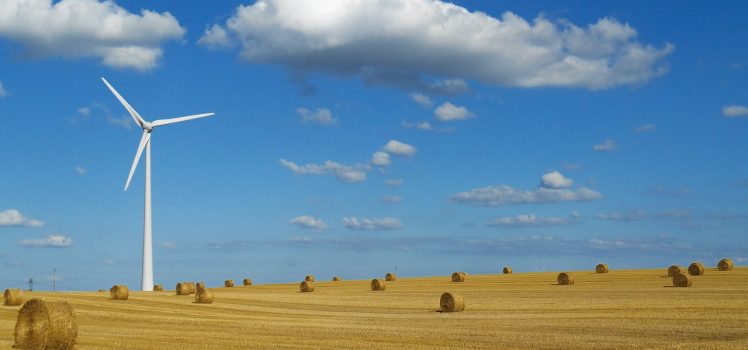
    Kiata Wind Farm is a wind energy project located 50km north west of Horsham, Victoria. Windlab, an Australian owned company, is developing the project from its Canberra headquarters. Kiata Wind Farm is a 30 MW wind farm. When operational the project will provide enough clean energy for over 20,000 households.

    It [WindLab] was established to commercialise world leading atmospheric modelling and wind energy assessment technology, developed by Australia’s premier scientific research institute, the CSIRO.

    Links:


    SaveSave

    SaveSave

    SaveSave

    SaveSave

    SaveSave

    SaveSave

  • A Google Green

    A Google Green

    Tipping points are not always obvious, this one may be.

    Two announcements this week, juxtaposed. Infrastructure Victoria’s 30-Year Strategy and Google’s move on renewable energy in 2017.

    Technology companies now account for about 2% of total Global Carbon emissions, that rivals the aviation industry. Let’s not even consider the amount of fresh water they require, that’s another article…

    Consider that in 2015,  Google bought 5.7 terawatt hours (TWh) of renewable electricity, a little less than the 7.6TWh generated by all of the UK’s solar panels that year. The majority of the power comes from windfarms in the US. [Source: The Guardian]

    Google’s data centres and the offices for its 60,000 staff will be powered entirely by renewable energy from next year, in what the company has called a “landmark moment”.

    Google is already the world’s biggest corporate buyer of renewable electricity, last year buying 44% of its power from wind and solar farms. Now it will be 100%, and an executive said it would not rule out investing in nuclear power in the future, too.

    Url Hölzle, Senior Vice President of Technical Infrastructure for google said recently:

    I’m thrilled to announce that in 2017 Google will reach 100% renewable energy for our global operations — including both our data centers and offices. This is a huge milestone. We were one of the first corporations to create large-scale, long-term contracts to buy renewable energy directly; we signed our first agreement to purchase all the electricity from a 114-megawatt wind farm in Iowa, in 2010. Today, we are the world’s largest corporate buyer of renewable power, with commitments reaching 2.6 gigawatts (2,600 megawatts) of wind and solar energy. That’s bigger than many large utilities and more than twice as much as the 1.21 gigawatts it took to send Marty McFly back in time.


    US Corporate Energy Purchase
    [Source: Environment Google 2016 ]

    He points out a simple business imperative:

    The science tells us that tackling climate change is an urgent global priority. We believe the private sector, in partnership with policy leaders, must take bold steps and that we can do so in a way that leads to growth and opportunity. And we have a responsibility to do so — to our users and the environment.


    Links

  • The Architecture of Infrastructure?

    Yes, think about this for a moment. N. E. G. A. T. I. V. E. spot-price for electricity. Policy, expenditure, loan-term investment; all predicated on an underlying assumption of markets. Beware the paradigm shift…

    Links

  • Melbourne formally divests

    Melbourne formally divests

    In a small but significant manner, the City of Melbourne, in its City of Melbourne Clean Energy Proposal, has formally affirmed, in a unanimous vote of all eleven councillors;

    to not directly investing in any fossil fuel or fossil fuel aligned companies into the future.

    As I have said many times, #strandedassets is and will increasingly become, the primary policy issue confronting advanced/modern economies. Harmonizing investment pipelines with infrastructure and demographic planning requires considerable focus and management expertise that relies on bi-partisan long-term commitments. Yes, I know.

    A considerable challenge.

    COP21 will be a telling milestone in assessing the “readiness for transition…”

    Energy, Employment,Education, Environment, engagement in civil-society, Security: the policy trajectories of all these domains require intelligent, rational and collaborative approaches based on the fundamental policy driver: Climate.

    Melbourne City’s proposal contains these five components:

    1. Reaffirms its commitment to clean energy through its investments.
    2. Notes that the City of Melbourne has no direct investment (shareholdings) in any fossil fuel companies or fossil fuel aligned companies.
    3. Commits to not directly investing in any fossil fuel or fossil fuel aligned companies into the future. This commitment will be reflected in the City of Melbourne’s Investment Policy when it is next reviewed.
    4. Requests management write to the Trustees of Council’s default superannuation fund Vision Super and request a Fossil Free Investment option be available to members.
    5. Resolves that when the transactional banking services are next tendered, respondents will be requested to complete a questionnaire on their exposure and support to the fossil fuel sector. These responses are to be taken into consideration when deciding to award the transactional banking services contract.

    Of further interest is the Council’s wish to both introduce a fossil-fuel-free superannuation option for staff by influencing major Superannuation fund managers and seeking to audit and screen all future Banking transactions for exposure to “fossil-fuel-aligned companies”.

    This also comes directly on the heels of the National Tertiary Education Union becoming the first Union in Australia to divest of fossil fuels.  Well done to the @NTEUNational .

    The growing momentum in the divestment of fossil fuels is significant.  Some suggest investments to the value of $2.6 Trillion has been re-allocated to date.

    We certainly know the benefits to the Rockefeller Brothers Fund [YES, that Rockefeller] when they divested their $850 Million fund just on twelve months ago.

    The challenge for political leaders and community alike is to de-couple from what Barry Jones once called the “rise of managerialism” and begin to think and plan… “in decades, not twitter moments”.

    Jones opined as recently as 2012 that:

    We must all search for the ”shock of recognition” which enables us to find ourselves, expanding our understanding both of the universe and of each other

    If the existential threat of anthropogenic climate change is not sufficient to provide for the “shock of recognition” to both the Apollonian and Dionysian amongst amongst those that profess to “serve the public”, then I am not sure what can.

    The “public good”, collides with “private benefit” .

    Links


  • Limits to Growth …was right…

    Limits to Growth …was right…

    Limits of Growth Cover
    [Source: Club of Rome]
    LTG
    Source: The Guardian

    I was a school student when this first Club of Rome Report was widely heralded.

    I was in University studying Geography, History, Literature and Politics when I looked closely at its research and findings.

    I was teaching when the “20 year old” report was critiqued as flawed and plain wrong.

    As Limits to Growth concluded in 1972:


    If the present growth trends in world population, industrialisation, pollution, food production, and resource depletion continue unchanged, the limits to growth on this planet will be reached sometime within the next one hundred years. The most probable result will be a rather sudden and uncontrollable decline in both population and industrial capacity.

    Four decades after the book was published, Limit to Growth’s forecasts have been vindicated by new Australian research.

    -The Guardian


    The task was very ambitious. The team tracked industrialisation, population, food, use of resources, and pollution. They modelled data up to 1970, then developed a range of scenarios out to 2100, depending on whether humanity took serious action on environmental and resource issues. If that didn’t happen, the model predicted “overshoot and collapse” – in the economy, environment and population – before 2070. This was called the “business-as-usual” scenario.

    The book’s central point, much criticised since, is that “the earth is finite” and the quest for unlimited growth in population, material goods etc would eventually lead to a crash.


    So were they right? We decided to check in with those scenarios after 40 years. Dr Graham Turner gathered data from the UN (its department of economic and social affairs, Unesco, the food and agriculture organisation, and the UN statistics yearbook). He also checked in with the US national oceanic and atmospheric administration, the BP statistical review, and elsewhere.

    That data was plotted alongside the Limits to Growth scenarios.

    The results show that the world is tracking pretty closely to the Limits to Growth “business-as-usual” scenario.

    As described below, data from the forty years or so since the LTG study was completed indicates that the world is closely tracking the BAU scenario. In the BAU, during the 20th century increasing population and demand for material wealth drives more industrial output, which grows at a faster rate than population.

    LTG
    Source: The Guardian


    Links:

  • Abnormal Autumn

    The first five points from the Executive Summary of IPCC’s latest regional report for Australasia:

    1. The regional climate is changing (very high confidence).
    2. Warming is projected to continue through the 21st century (virtually certain) along with other changes in climate.
    3. Uncertainty in projected rainfall changes remains large for many parts of Australia and New Zealand, which creates significant challenges for adaptation.
    4. Recent extreme climatic events show significant vulnerability of some ecosystems and many human systems to current climate variability (very high confidence), and the frequency and/or intensity of such events is projected to increase in many locations (medium to high confidence)
    5. Without adaptation, further changes in climate, atmospheric CO2 and ocean acidity are projected to have substantial impacts on water resources, coastal ecosystems, infrastructure, health, agriculture and biodiversity (high confidence).

    Abnormal Autumn

    The average temperature for April 2014 was 1.11 degrees celsius above the long-term average, and continuation of abnormally warm temperatures into late May has delayed the onset of winter conditions across southern Australia. [Source: Climate Council]

    Abnormal Autumn
    [Source: Climate Council]


    Link

  • LIve Solar Map

    An interesting innovation and visualisation from the APVI.

    The Institute comprises companies, agencies, individuals and academics with an interest in solar energy research, technology, manufacturing, systems, policies, programs and projects.

    Live Solar
    Click to see live map

    The Australian Photovoltaic Institute [APVI] undertakes a range of technical, economic and social research projects on issues relevant to PV. They work with a range of other organisations and all members are encouraged to participate. Their research is used for reports, submissions, seminars, information and education.

    One principal research activity of the APVI is to manage Australian participation in the International Energy Agency Photovoltaic Power Systems Program (IEA PVPS, www.iea-pvps.org) and the IEA Solar Heating and Cooling Program (IEA SHC, www.iea-shc.org).

    Links

  • Solar Grid Parity

    Where’s an Australian Solar manufacturing industry when you need one?

    Solar panels
    Q-Cells

    In the last week, my family added 4.6kW of solar generation capacity to our roof, with a provision to increase this to over 9kW.

    I gather I am not the only person in the world doing this.

    According to many sites online Deutsche Bank just released new analyses concluding that the global solar market will become sustainable on its own terms by the end of 2014, no longer needing subsidies to continue performing.

    Reports say that the German-based bank said that rooftop solar is looking especially robust, and sees strong demand in solar markets in India, China, Britain, Germany, India, and the United States.

    As a result, Deutsche Bank actually increased its forecast for solar demand in 2013 to 30 gigawatts — a 20 percent increase over 2012.

    The Deutsche Bank report can be found here.

    I gather I am not the only person doing this in Victoria, that is also obvious.

    It is interesting to note that total CO2 emissions for Victoria at this stage of 2013 are 9.2% lower than at a similar stage last year. Of course there are numerous reasons/drivers for this, but the figures are interesting, none-the-less.

    CO2 Emissions
    Source: Climate Group

    Baselines for emissions:

    • 1990: 20% above
    • 2000: 7.3% below

    Industry

    We chose Q-Cells, originally manufactured by the German company but now wholly owned by South Korean Hanwha Q-Cells. Production is in Germany and Malaysia.

    Our inverter is the German made SMA Sunny Boy.

  • 330 and counting – State of the Climate

    The next time some-one, particularly a Politician, suggests climate anomalies and surface warming is not a [the] critical policy challenge of our time, ask them if they would bet their house or their life on tossing a coin 330 times and getting the same result?

    Land and Ocean Temperatures 2012
    Land & Ocean Temperatures [NOAA]

    The average global temperature across land and oceans during August 2012 was 0.62°C (1.12°F) above the 20th century average of 15.6°C (60.1°F) and ranked as the fourth warmest August since records began in 1880. Monthly global temperatures anomalies have been among the five highest for their respective months for five consecutive months, since April 2012. August 2012 marks the 36th consecutive August and 330th consecutive month with a global temperature above the 20th century average. The last below-average August temperature was August 1976 and the last below-average temperature for any month was February 1985.

     Links: