
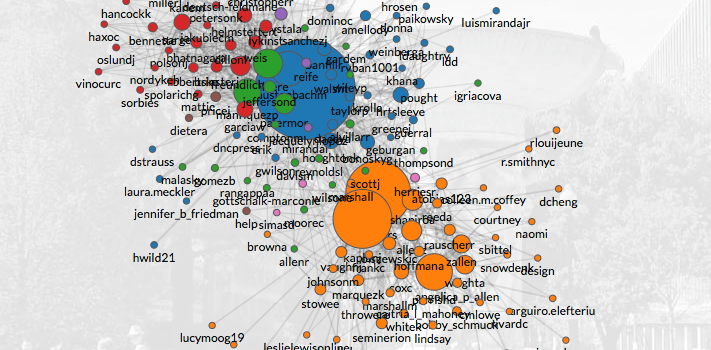
The Clinton Circle, maps emails from Hillary Clinton, John Podesta and the DNC in the United States.. Certainly topical!
The data is entirely sourced from WikiLeaks, and was last updated on Sun Oct 30, 2016.
People-centric view of email
ClintonCircle was not created to visualize these emails, but it is a fork of a tool called Immersion that they launched in 2013 that helps people visualize and understand the networks they weave through email interactions. They say:
Immersion is an invitation to dive into the history of your email life in a platform that offers you the safety of knowing that you can always delete your data.
[Source: Hillary Clinton MIT Macro Connections]
Macro-Connections study collective learning at @MIT@medialab by looking at the evolution of what people make, and by making tools to improve how they communicate.
Those of us over thirty years of age, may have lived the majority of our lives without the World Wide Web, yet I imagine it is increasingly more difficult to remember what that was like.
Perhaps more significantly, those under thirty have only lived with the World Wide Web.
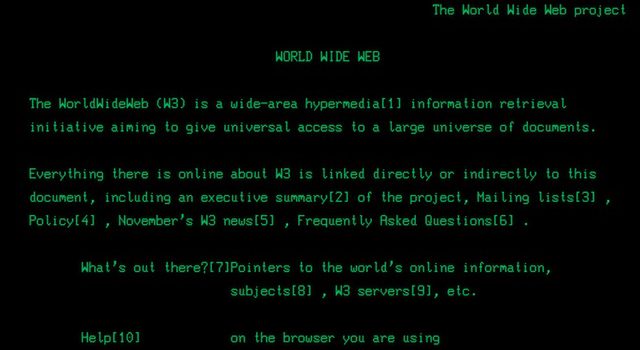
25 years ago, the first website was launched. A simple announcement in a usenet group:
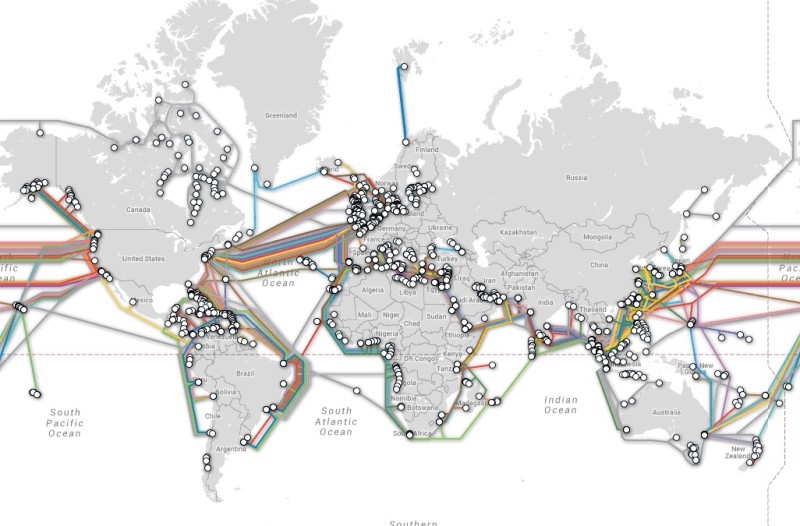
Cables lying on the seafloor bring the internet to the world. They transmit 99 percent of international data, make transoceanic communication possible in an instant, and serve as a loose proxy for the international trade that connects advanced economies.
British physicist Tim Berners-Lee invented the web at CERN in 1989. The project, which Berners-Lee named “World Wide Web”, was originally conceived and developed to meet the demand for information sharing between physicists in universities and institutes around the world.
On April 30, 1993, the European Organisation for Nuclear Research (CERN), where Sir Tim worked, made the web available to the world for free.
The first website at CERN – and in the world – was dedicated to the World Wide Web project itself and was hosted on Berners-Lee’s NeXT computer.
I still have very vivid memories of Paul Wilson at Pegasus networks in Brisbane, providing a test demonstration of the new “browser” and hyper-links though the Mosaic browser.
Pegasus networks was a member of the Association of Progressive Communications, a partner to our I*EARN Australia and Australia’s first public internet service provider.
It was 1965 when Mick Jagger and Keith Richards penned the words to “Get off of my Cloud“.
I have no doubt that Mat Honan, a senior writer at Gadget Lab shares precisely the same sentiment [although perhaps] for very different reasons.
I would encourage all of my clients, friends and colleagues to take a few minutes to read Mat’s story… There but for….
Just last week, this very experienced writer, author and technologist was hacked, and hacked in a way that has demonstrated that the profoundly simple access to cloud computing, the “connected” solution, is also the very “achilles heel” of what is essentially a modern version of the very flaws that “personal computing” was designed to alleviate.
For those of us old enough to have lived before modern computers, [which is not that old] there is a huge irony in the fact that it was Apple’s iCloud environment that was used to compromise an individual’s personal and business records, including phone, laptop and online storage.
The marketing narrative was that “We” moved to “personal computing” to wrest control from the “mainframe”, from the corporate behemoth and overlords and allow “personal” computing to inject a more human, local, friendly and secure environment. This is fine, until you have to back up a house full of teenager’s devices and coordinate tera-bytes of music files…. The cloud is useful and important, but this comes at a price.
A price that perhaps means revisiting some of the very risks [of centralisation] that personal computing was inherently designed to alleviate.
Remember Apple’s 1984 commercial?
Anyway….
As is nearly always the case in such circumstances, human gullibility and “open” and impersonal security measures all combined to create a perfect-storm that allowed some less-than-friendly-types to “assume” enough details of Mat Honan’s “identity” to trick the operators of the “cloud” environment to allow access to key entry points.
As the Wired article points out:
The very four digits that Amazon considers unimportant enough to display in the clear on the Web are precisely the same ones that Apple considers secure enough to perform identity verification.
This also speaks to the ubiquity and almost universal surrender of any shred of Privacy for individuals in a modern, connected, online world. Don’t get me wrong, I am a HUGE fan and advocate of connectivity, [not-withstanding my concerns] but the ubiquity with which such [once personal] information such as Bank Account numbers, phone numbers and addresses are combined/mashed/published/shared and circulated online leads to the inevitable conclusion, as experienced by Mat Honan last week.
His personal and business records,[sadly 18 months of his young daughter’s photographs] phone, computer and online backups were wiped out, because, well, just because…..
Of course, this could have been a LOT, LOT LOT worse.
If the “hackers” chose to “live” in Mat Honan’s online identity, rather than just destroy things, even if just for a few hours or days, posting as Mat online, purchasing as Mat online, transferring online services, accounts, registrations, passwords and publications, then Mat would most surely wish he had NEVER seen the cloud, let alone got on it…
This is a salutary lesson to all of us. I congratulate Mat for having the care and concern to actually publish his experience.
Small and medium businesses that maintain little or no genuine password or customer security, individuals and sole-traders that get so busy, it just seems OK to use the same password combination for a dozen or so “important” sites, families that share accounts, even large corporations who “forget” after the third down-size and outsource of the IT group, just how easy some of this can be…
All have potentially benefitted from Mat’s experience.
I say potentially, because I fear [and experience tells me] that some will read Mat’s story, MOST, sadly, may take a glance up in to the cloud, wonder for a moment, then happily give their credit card number to the Pizza guy….
A new report, released in September of this year, conducted jointly by Ericsson (NASDAQ:ERIC), Arthur D. Little and Chalmers University of Technology in 33 OECD countries, quantifies the isolated impact of broadband speed, showing that doubling the broadband speed for an economy increases GDP by 0.3%.
A 0.3 percent GDP growth in the OECD region is equivalent to USD 126 billion. This corresponds to more than one seventh of the average annual OECD growth rate in the last decade.
At a local level we know that such infrastructure and access is critical to the long-term well being of regions.
In work completed by Peter Brain and National Economics over many years, including the “State of the Regions” report [SOR] we have known of the relationship [for example] between ADSL speeds and per-capita income or ADSL speeds and the NIEIR unemployment rate. This is [perhaps] obvious [now] but still poorly understood and demonstrated when it comes to discussions about “national skills” or the “urban/regional divide” debates in modern policy positions.
Average ADSL Speed vs Per Capita Income & NIEIR Unemployment Rate
National Economics modelling showed that lagging regions have poor access to quality telecommunications infrastructure, preventing efficient internet usage and, therefore, reducing the possibilities for exporting and attracting high technology firm start-ups. Low productivity/economic regions have relatively high local government tax rates because the cost of delivering basic services to the community is relatively high.
The OECD research further confirms these relationships. The National Broadband Network and those working to improve the links for regional Australia in to a modern skills base, including regional and local councils, will do well to stay focussed on such research.