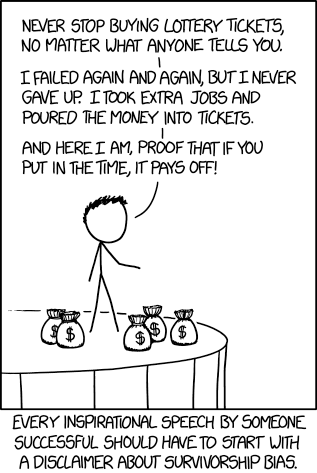
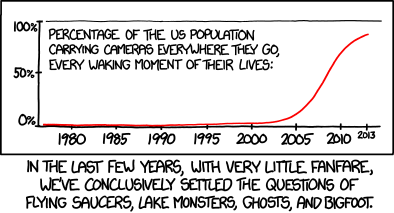
“Look, you who think the gods have no care of human things, what do you say to so many persons preserved from death by their especial favour?”, to which Diogenes replied: “Why, I say that their pictures are not here who were cast away, who are by much the greater number.”
Sam Harris on the fifth anniversary of Christopher Hitchen’s death.
Missing Hitch
It has been five years, my friend.
Five short years since you taught us how to die with wisdom and wit. And five long ones, wherein the world taught us how deeply we would miss you.
Syria. Safe spaces. President Trump.
What would you have made of these horrors?
More times than I can count, strangers have come forward to say, “I miss Hitch.” Their words are always uttered in protest over some new crime against reason or good taste. They are spoken after a bully passes by, smirking and unchallenged, whether on the Left or the Right. They have become a mantra of sorts, intoned without any hope of effect, in the face of dangerous banalities or lies. Often, I hear in them a note of personal reproach. Sometimes it’s intended.
You are not doing your part.
You don’t speak or write clearly enough.
You are wrong and do not know it—and it matters.
There has been so much to say, and no one to say it in your place.
I recently [briefly] participated in a planning session and debate [through my WhaleSongServices consultancy business ] with an ex-colleague and some of his senior/executive staff regarding particular public policy challenges for a Government Department in the near to medium term [5-10 years] and the broader strategic needs of their planning.
We [again briefly] touched on the concept within public debate of “balance” and “both sides” of the story. False equivalence, is in my view, the scourge of public discourse, but it sure sells papers/improves ratings. The rise, of what Barry Jones called many years ago, “managerialism” in public policy, further deadens policy progress in to ‘binary’ decisions that create philosophical and programmatic “trench-warfare”. We find many who wish to find “balance” where there is none, or perhaps are happy with simply being in the trench…
This most certainly does nothing for those in need of sound and strategic public policy [ all of us ].
This exchange made me reflect that if there was only one word a teacher could use in any classroom, if there was only one word I could teach any student or my own children, it would be consilience.
Agreement between the approaches to a topic of different academic subjects, especially science and the humanities.
In other words, multiple, independent, verifiable converging views.
Consider the National Review. The editors describe the National Review as “America’s most widely read and influential magazine and web site for conservative news, commentary, and opinion”
In December 2015, The US National review highlighted [at best] their own flawed methodologies or [at worst] an intentional, untruthful re-adjustment of selective data to support a pre-defined position when they posted on twitter a seemingly straightforward contribution about Climate Change. They said:
The same graph with the Y-axis corrected for scale from Scripps.
[Source: NOAA ]
But what about the Y-Axis?
Yes, anyone that has been through a high-school class of statistics, will probably remember the “Lies, damn lies and statistics” approach that many [most?] teachers seem to take. Right at the top of the “hit-list” is the suspicion drummed into students when someone presents a chart that has a “compressed” Y-Axis. This is, in many circumstances, a valid cause for review, certainly suspicion, if the publisher is unaware that the axis has been compressed.
Sometimes, starting the Y-axis at zero is the BEST way to lie with statistics
Vox.com journalists were so fed-up with the ‘blow-back’ they received whenever they posted a chart with a compressed y-axis, they responded in the way they know best.
Consilience
…but wait, there’s more..
Perhaps the National Review should consider a reconstructed graph going back 2000 years? Proxy measurements can be used to reconstruct the temperature record before the historical period.
From these, proxy temperature reconstructions of the last 2000 years have been performed for the northern hemisphere, and over shorter time scales for the southern hemisphere and tropics [Source: Wikipedia]
Brooke Gladstone [ @OTMBrooke ] and Bob Garfield [ @Bobosphere ] from the ever-valuable and always erudite On-the-media from WNYC in the United States made two excellent contributions to the debate about false equivalence and media reporting in their pieces:
At a time when reason and evidence appear under siege, and “belief” and “opinion” have a seeming privileged status in civil discourse unknown since the enlightenment, I am reminded of the words of the 17th Century Dutch Philosopher, Spinoza:
The highest activity a human being can attain is learning for understanding, because to understand is to be free.
The year my father was born, 1916, Albert Einstein pondered the universe and produced his General Theory of Relativity [ Die Feldgleichungen der Gravitation ].
This theory posits that the force of gravity is a “warping” of space itself. When gravitating objects move, they generate a “ripple” in space.
When such a ripple passes the Earth, our local space is alternately stretched and compressed, rather as, when a stone is thrown into a pond, the induced outward-moving wave causes the water at any point to cyclically rise and fall – but by a tiny amount.
Keith Riles, from the University of Michigan points out that
Einstein was skeptical that gravitational waves would ever be detected because the predicted waves were so weak. Einstein was right to wonder – the signal detected on September 14, 2015 by the aLIGO interferometers caused each arm of each L-shaped detector to change by only 2 billionths of a billionth of a meter, about 400 times smaller than the radius of a proton.
Szabolcs Marka, a physics professor at Columbia University, told CNN that “we will be able to study not just Einstein’s general relativity — we’ll be able to find objects we only imagined would exist. We should see a universe that has never been observed before.”
September 14th 2015
The gravitational waves were detected on September 14, 2015 at 5:51 a.m. Eastern Daylight Time (09:51 UTC) by both of the twin Laser Interferometer Gravitational-wave Observatory (LIGO) detectors, located in Livingston, Louisiana, and Hanford, Washington, USA. The LIGO Observatories are funded by the National Science Foundation (NSF), and were conceived, built, and are operated by Caltech and MIT. The discovery, accepted for publication in the journal Physical Review Letters, was made by the LIGO Scientific Collaboration (which includes the GEO Collaboration and the Australian Consortium for Interferometric Gravitational Astronomy) and the Virgo Collaboration using data from the two LIGO detectors.
A Cosmic Microphone
Marka said to think of it as a “cosmic microphone,” an incredibly precise listening device that can detect distortions in space-time, the fabric of the universe. It’s so precise it can detect changes the size of a soccer ball in the entire Milky Way galaxy.
The discovery of gravitational waves is like opening another of our senses, hearing the universe as well as seeing it.
And when we hear the universe, we will learn about the secret life of black holes — their birth, their death, their marriage, their feeding. We will hear when a black hole eats a neutron star.
Gravitational Waves
Two Black Holes Collide
[Source: LIGO – CalTech 2016 ]The collision of two black holes holes—a tremendously powerful event detected for the first time ever by the Laser Interferometer Gravitational-Wave Observatory, or LIGO—is seen in this still from a computer simulation. LIGO detected gravitational waves, or ripples in space and time generated as the black holes spiraled in toward each other, collided, and merged. This simulation shows how the merger would appear to our eyes if we could somehow travel in a spaceship for a closer look. It was created by solving equations from Albert Einstein’s general theory of relativity using the LIGO data.
[Source: Physical Review Letters & C. Henze/NASA Ames Research Centre ]The two merging black holes are each roughly 30 times the mass of the sun, with one slightly larger than the other. Time has been slowed down by a factor of about 100. The event took place 1.3 billion years ago.
General Relativity – In a Nutshell
Albert Einstein explained that what we perceive as the force of gravity in fact arises from the curvature of space and time.
He found that space and time were actually interwoven into a single continuum known as space-time.
As he worked out the equations for this general theory of relativity, Einstein realised that massive objects caused a distortion within this continuum.
Imagine a large body in the centre of a trampoline. The body would press down into the fabric, causing it to dimple. If a marble was then rolled around the edge, it would spiral inward toward the body, pulled in much the same way that the gravity of a planet pulls at rocks in space.
He proposed that objects such as the sun and the Earth work in a similar way. In the presence of matter and energy they can evolve, stretch and warp, forming ridges, mountains and valleys that cause things moving through to zigzag and curve.
Einstein determined that massive objects (like the Earth) cause a distortion in space-time which is felt as gravity.