

Hardball… on a global scale!
What are the #PanamaPapers? @4corners explains the unprecedented #MossackFonseca data leak https://t.co/1Fepqm2KdAhttps://t.co/sSpEiM6EjV
— ABC News (@abcnews) April 4, 2016

Hardball… on a global scale!
What are the #PanamaPapers? @4corners explains the unprecedented #MossackFonseca data leak https://t.co/1Fepqm2KdAhttps://t.co/sSpEiM6EjV
— ABC News (@abcnews) April 4, 2016

Profound economic, social and civil changes have provoked a remarkable series of temporally cogent observations from vastly different actors this week. This highlights the diverse yet converging, social, academic and political recognition at the heart of public-policy challenges in the 21st century.
At the CORE of future policy and an inclusive, functioning civil society, is the recognition of the centrality of good governance.
Tim Lyons [@picketer] writing in todays Saturday Paper has produced a masterful argument centred on the higher-order challenges for post-industrial, modern economies and has moved me to connect a series of pieces I have seen this week.
Lyons hits the nail on the head when referencing Dr. Ken Henry’s oft-used phrase that “good governance can be a source of national competitive advantage“.
Whilst neither Tim Lyons or Ken Henry would perhaps agree with my references to the “Old Whig”, Edmund Burke, they would, I have no doubt, forcefully concur with his observation that:
“When bad men combine, the good must associate; else they will fall one by one, an unpitied sacrifice in a contemptible struggle.”
As Lyons points out in his article, it is not simply a matter of illegality or corruption, but the more negative and corrosive consequences of influence, lack of transparency and confusion of “access” with “representation” that challenges modern policy to be effective beyond the few.
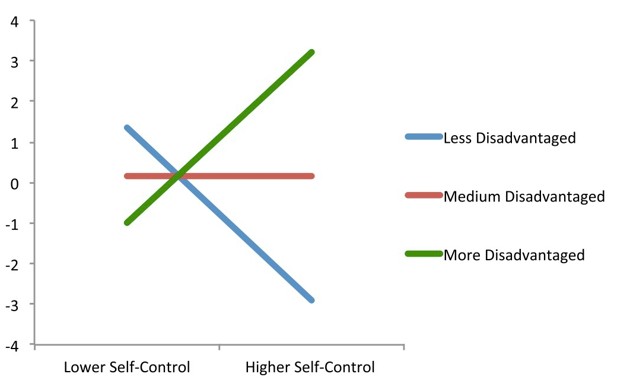
James Hamblin [ @jameshamblin ] writing in this week’s The Atlantic, provides an equally compelling and well researched argument on the Paradox of Effort. Hamblin’s excellent article highlights the research of Professor Gregory Miller and his team from Northwestern University highlighting the medical research behind what some may euphemistically call the “protestant work ethic” that underpins much of the Calvinist predilections [my term] of modern economic and social policy.

We’re talking about people hardly being given a chance to pursue their goals without having to pay with their health. This is really, really important work.”
As if by design, both Agnes Török [ @AgnesTorokPoet ] and Mhairia Black [ @MhairiBlack ] appeared this week, to provide a qualitative commentary that is equally lived, researched, eloquent and authentic. Young, powerful women making genuine assessments of the structural flaws in modern, advanced economies/societies.
Wisdom beyond their years.
These are the voices of a modern civil society. They are also the voices that many would consider “subversive” or “counter”, yet ironically compliment the words of the “Old Whig”
Consider Agnes’ observations on a young person’s experience of the transition to the UK Labour market.
Worthless – Agnes Török
Also consider the United Kingdom’s youngest MP, the SNP’s Mhairi Black.
Maiden Speech – Mhairi Black -MP [UK House of Commons]
Commission for Governance
Returning to Tim Lyons’ original premise of a flawed and [at best] biased polity, no longer serving the whole, it seems prudent if not prescient to consider his contention of a “Commission for Governance“. I will certainly #vote1CommissionforGovernance
“Men are qualified for civil liberty in exact proportion to their disposition to put moral chains upon their own appetites…in proportion as they are more disposed to listen to the counsels of the wise and good, in preference to the flattery of knaves. Society cannot exist, unless a controlling power upon will and appetite be placed somewhere; and the less of it there is within, the more there must be without. It is ordained in the eternal constitution of things, that men of intemperate minds cannot be free. Their passions forge their fetters.”
– Edmund Burke
For those living and working in rural areas, the importance of providing genuine pathways to skilled employment for local populations, particularly young-people, is paramount. We understand in great detail, the challenges of ageing rural populations and structural adjustments. This is more than just a “microcosm” of the challenges facing our national economy.
Working in the field of skills development, labour markets and rural and regional planning, the nature of this model of collaboration and its result, has genuinely raised my interest and admiration.
The genesis of this idea [among others] came about during a meeting of 11 School Councils in 2005.

I have had the honour of attending the dual official opening[s] of the $AUD 11.3 Million dollar, Central Ranges Trade Training Centre, a unique collaboration of nine Government and Catholic secondary schools spanning a potential student population of some 3,500 across the shires of Mitchell and Murrindindi and the City of Whittlesea.

I say “unique” with genuine intent. It is rare [at least in my 30 years of experience] to see a level of collaboration, governance and coordination, that sees a number of individual schools, TAFE Colleges [Goulburn Ovens and Kangan Batman], Industry partners and a community-based planning network [Central Ranges LLEN] agree to fore-go individual funding, to maximise and pool available funds to establish a distributed network of infrastructure and human resources to supply a quality and depth of training opportunity that is clearly greater than the some of its parts.
Today in Seymour, the “Northern Hub” was officially opened by the Federal Minister for Skills and Training, The Honourable Brendan O’Connor and the Member for McEwen, Mr. Rob Mitchell. This completed the “bookend” of the opening of the Southern Hub, at Whittlesea Secondary College, just over a week ago. This complements the two other minor hubs, established and on-stream in 2012 at Alexandra Secondary College and Assumption College Kilmore.

In this expanded regional network, there are schools from the Government and Catholic sectors, their key leaders, school Principals, have chosen to take on a level of planning complexity and responsibility that is not easily reconciled with their “day-to-day” core-business, yet is clearly in the best interests of young people and employers throughout the region to gain access to training facilities and high-level qualifications in key areas of long-term skill-shortage.


Broadford Secondary College, as lead school in the consortium, coordinated and managed the five year project, yet received no capital investment. Seymour College and Whittlesea Secondary College, provided technical, programmatic and planning expertise and shared this with all schools and partners. This is what genuine leadership is, at the community level, these leaders have taken responsibility to build something for a region and the young people within it, well-beyond their individual school gates…
The other partners, specialists, governments and individuals have all contributed, having recognised the depth of collaboration and commitment of this consortium. To also complete such a complex task on budget and ahead-of-time, certainly challenges the stereotypical view of the public sector.
A genuine model of cluster-collaboration with concrete, long-term success. Congratulations to all involved.
The Central Ranges Trade Training Centre Consortium
This is re-produced from Andrew Leigh’s WebSite.
Among the most interesting debates in economics today is the dispute between Jeffrey Sachs and William Easterly over how best to help the world’s poor. The discussion is interesting not only because it concerns the most important question in all of economics, but also because Sachs and Easterly happen to be exceptionally good communicators. And like the longtime Mets-Yankees rivalry, both happen to be at New York universities: Sachs at Columbia University, and Easterly at New York University.
At stake is the question of whether development economics requires a Big Push or piecemeal reform. In The End of Poverty: Economic Possibilities for Our Time, Sachs argues that the world’s least developed countries are caught in a poverty trap, and that success requires a doubling of foreign aid. In The White Man’s Burden: Why the West’s Efforts to Aid the Rest Have Done So Much Ill and So Little Good, Easterly contends that much foreign aid has been wasted, and that it would be better to focus on taking modest, deliverable steps to make poor people’s lives better.
Whoever is right (my own view is that the truth lies somewhere between the two), the Sachs-Easterly debate has helped to galvanise a revolution in development economics. Integral to the development economics revolution has been the advent of rigorous randomised trials to find out what works. Long regarded as the ‘gold standard’ in medicine, a spate of randomised trials are taking place across the developing world.
In Kenya, researchers have shown that deworming drugs dramatically reduce school absences, while worm-prevention education programs had no impact whatsoever. In the Philippines, savings incentives have been shown to boost the assets of the poor. And in India, a program that paid teacher bonuses raised [“acrobat”] student test scores by a significant margin.
The reason randomised trials are so powerful is that they allow us to know the counterfactual: what would have happened if the program was not implemented? Because participants are assigned to the treatment and control groups by the toss of a coin, we can be sure that any systematic differences in outcomes are due to the program itself.
Beyond program evaluation, randomised trials have also been used to help researchers learn more about issues of governance, which have long bedevilled development efforts. In a famous randomised trial in Benin, researcher Leonard Wantchekon persuaded presidential candidates in the 2001 election to randomly alter their campaign strategies: giving high-minded public policy speeches in some villages, and pork-barrelling clientelist speeches in other villages. He found that candidates won more votes when they delivered a clientelist speech, and that male voters tended to be more easily swayed by offers of local patronage than female voters.
More controversially, Marianne Bertrand and co-authors recently followed a group of Indian applicants through the notoriously corrupt process of obtaining a driving licence. One group were offered a financial reward if they obtained their licence fast, while others were not. The researchers found that the payment did indeed lead applicants to get their licences faster, but their skills were no better. Given a surprise driving test afterwards, 69 percent failed. Evidence from the randomised trial helps understand how corruption in the licensing process operates, and may assist reformers in improving the system.
As the results from these and dozens of other randomised trials begin to pour in, development economists will continue to hone their knowledge about what works best, and whether the kind of grand strategy of Sachs or the more piecemeal approach of Easterly is likely to offer more promise for raising the living standards of those in developing countries.
Yet while randomised policy trials are transforming development economics, it is startling that our homegrown development challenge – raising the living standards of Indigenous Australians – has seen so little attention to rigorous evaluation. With Indigenous life expectancy at third world levels, too much of Indigenous policy seems to be driven by instinct, and too little by results.
Instead of digging in behind their favoured solutions, wouldn’t it be better if both sides of politics admitted that most social policies aimed at improving Indigenous living standards have failed? Once we acknowledge how little we know, we might then begin by applying the same gold standard evaluation technique to Indigenous social policies that we apply to new drugs.
A dozen randomised trials of Indigenous social programs would cost comparatively little, but provide valuable new evidence. In health and education, employment and family policies, Indigenous policymaking could do with a little less rhetoric and a little more of the modest searching that characterises the best of development economics today. Think your policy works? Let’s toss a coin and find out.
[Source: Dr. Andrew Leigh]
Dr Andrew Leigh is an economist in the Research School of Social Sciences at the Australian National University.
School Councils Get More Training.
As school communities across the State begin their election processes for 2007, the Minister for Education, the Hon. John Lenders, has released new materials to support all school councils.
Thousands of parent, community and teacher volunteers who sit on Victorian government school councils will now have the opportunity to be formally trained, the Minister for Education, John Lenders, said today.
Releasing new training and support materials for school councillors, Mr Lenders said school councillors who devote significant time and energy to creating the best possible learning environment for students will be better supported.
“School councillors play a vital role in the decision-making process, building community partnerships and determining the direction of the school,” Mr Lenders said.
“I’d like to thank school councillors across the state for their valuable work and the time they give up to benefit Victorian children.
“We want to ensure that councillors are not only recognised for their contribution but provided with first-rate training and training and support materials.
“School councillors play a vital role in the decision-making process, building community partnerships and are central to the efficient running of our schools.
“We need to ensure that school councillors are properly supported to carry out their work and meet challenges of the future.
“That’s why we have developed this comprehensive training and support package for new, existing and prospective school councillors.”
With school council elections under-way, Mr Lenders also encouraged more parents to consider nominating for school council.
“Not only is it a chance to contribute to society in a productive way, it is a chance to be involved in your child’s education and school and get to know other parents and teachers,” he said.
The materials include a website with advice to schools, training modules, induction sessions for new school councillors and information sheets.
In addition to the web materials, training will cover, school finance, policy development, school strategic planning and effective meetings.
Schools are encouraged to get in touch with their regional office to access training. The launch of the new support materials follows the Review of School Governance in Victorian Government Schools completed in 2005.
For more information on support for school councils visit www.education.vic.gov.au
ALGA Publishes 2006 State of the Regions Report.
The Australian Local Government Association [ALGA]released it’s highly valuable State of the Regions Report yesterday, 27th November.
The survey of Australia’s 64 regions is commissioned annually by the Australian Local Government Association (ALGA) from National Economics. This is the 9th survey undertaken by National Economics.
Editors Note: The Central Ranges LLEN Board commissioned National Economics in 2002 and 2004 to produce the CRLLEN Environmental Scan. A document and data set that has been highly valued by planners across our region. An enhanced scan of the LLEN region will be published in 2007.
The 2006 State of the Regions survey is set against a backdrop of accelerating of population growth in the ‘resource zones’ and a ten-year land boom that saw land values triple between 1996 and 2005 creating a housing affordability crisis for renters and first home buyers.
Despite improvements in broadband usage, the lack of connectivity in parts of regional Australia translates to an inability to attract new industry and well trained productive workers. Lower land costs make these regions attractive to low-income earners, fixed-income retired or semi-retired households.
Regions with higher concentrations of low and fixed income earners tend to be less attractive to young people and skilled workers which further reduces the skills base and accelerates the loss of skills and critical mass for improved connectivity.
The key to reversing this vicious cycle is to reverse the flow of skills and improve connectivity – both transport and communication – between relatively disadvantaged regions and successful regions as well as international markets. The report says Australia’s local government areas could resemble California’s Silicon Valley, given a boost to regional innovation, and mentions the Bendigo Community Telco as an example.
The report paints a picture of regions and local communities fighting back by innovating and generating investment. It shows that:
The report praises the Australian Government’s major broadband initiative – Broadband Connect and Clever Networks – which will have flow-on benefits and shows that much of the current investment in upgrading broadband services focused on upgrading existing exchanges in successful regions to higher bandwidths that provide higher speeds.
The report found that Australia’s most successful regions, when measured by the number of patents per 100,000 population and high tech start-ups, are still the major cities, particularly Sydney, and Melbourne.
It is evident that the major centres, with their internationally networked businesses, universities and research centres attract more firms, and the impact of this is that dense clusters of activity create a higher level of patent applications.
Municipalities that are (financially) smaller or (geographically) larger face additional disadvantage due to longer travel times and scale. The report finds that the quality of service each dollar can purchase can vary considerably between municipalities.
The resources necessary to give disadvantaged councils a better chance to play a more effective role in improving economic performance outcomes will in the main have to come from grants or other revenue enhancing measures.
Regarding council infrastructure, the report estimates that $2.3 billion in extra money is needed to bring resource-poor local government regions infrastructure up to the general standard. On the issue of road finance, the report advocates a move to road finance through user charges with council rates only paying for maintaining local access roads.
I highly commend this report to all LLEN members and those community members that have an interest and stake in sustainable regional development.
3 Outstanding Community Forums.
We would like to alert members, subscribers and all LLEN stakeholders to three outstanding upcoming forums that focus on much of what is at the heart to the work of the Central Ranges LLEN. Three world-class opportunities exist to engage with key policy makers, community leaders and researchers who are all focused on strengthening communities by finding ways to better synchronise local planning, improve skill, competitiveness and economic and social outcomes.
The two most important developments in policy making in recent years concern efforts to ‘join-up’ different public services and related initiatives to strengthen communities to help them become more economically and socially resilient.
The Centre for Public Policy Governments and Communities in Partnership conference will bring together key policy makers, community leaders and researchers from around Australia , together with leading experts from the UK, Ireland, Austria, Canada, the United States and New Zealand . The aim of the program will be to deepen the academic and policy debate about the impact and value of these transformations, and also to support the needs of practitioners to discuss cutting-edge cases and issues with colleagues from around the world.
It is organised by the OECD LEED Programme in collaboration with the Centre for Public Policy.
Michael Porter, acknowledged as the most influential living management thinker, and respected Harvard Business School professor, will share his latest unpublished material on strategy and global competitiveness, with an in-depth focus on Australia. Professor Porter is a leading authority on competitive strategy and the competitiveness and economic development of nations, states, and regions. He leads The Institute for Strategy and Competitiveness.
Professor Porter’s work on Institutional structures for rural economic development and his work on regional clusters is of particular [and critical] interest to many stakeholders within the LLEN and broader region. I highly encourage representatives from peak industry bodies and local government planners to consider attending this event.
An exciting opportunity exists for people Australia – wide who have an interest and commitment to Asset Based Community Development (ABCD) philosophies and methodologies, and want to further their facilitator / trainer skills, and become part of the creation of an Australian National Network.
The Asset-Based Community Development Institute (ABCD), established in 1995 by the Community Development Program at Northwestern University’s Institute for Policy Research, is built upon three decades of community development research by John Kretzmann and John L. McKnight. The ABCD Institute spreads its findings on capacity-building community development in two ways:
(1) through extensive and substantial interactions with community builders, and
(2) by producing practical resources and tools for community builders to identify, nurture, and mobilize neighborhood assets.
Three facilitator training workshops are being held, each with a maximum of 30 participants. Training will be provided and certified by the ABCD Institute at Northwestern University in Chicago, USA.
Contributors include The Municipal Association of Victoria, Centre for Community Child Health – The Royal Children’s Hospital and Peter Kenyon’s “Bank of Ideas” group.
OECD – LEED – Local Economic and Employment Development
Centre for Public Policy – Univeristy of Melbourne
Michael Porter – The Institute for Strategy and Competitiveness -Harvard University
Northwestern University’s Institute for Policy Research – ABCD
CRLLEN’s Discussion Forum on Asset Based Community Development
[Archive from 2005]
Area and place-based planning is critical for the future welfare of *all* young people making the transition from School to work and further study. School Councils and other governing bodies play a key rule in developing new structures to support entire communities education and employment outcomes.
On Tuesday night the 26th of April [2005], almost 60 people representing 11 School communities and their college’s council or governing board, met with the Chairperson of the Victorian Learning and Employment Skills Commission [VLESC], Mr. Peter Thomas, at a dinner forum hosted by the Central Ranges Local Learning and Employment Network at the outstanding Lancemore Hill Conference Centre.
Also in attendance was VLESC Commissioner Rowena Allen and President of the Association of Victorian School Councils, Mr. Stephen Franzi-Ford.
Mr. Gerard Hard, Chairperson of the CRLLEN Board, welcomed the assembled School Principals, School Council Presidents and councillors from Local Governments in the Macedon, Mitchell and Murrindindi Shires.
Mr. Hard pointed out how gratifying it was to see such representation from all sectors of the schools across the LLEN area.
Attending on the evening were representatives on School Councils from:
Member for Seymour, Mr. Ben Hardman, in introducing Peter Thomas, remarked that seeing all the Government, Catholic and Independent schools in attendance, was quite an historic occasion and credit should go to the Board of the LLEN and each college community for looking for ways to worktogether to improve outcomes for young people in the region.
Peter Thomas spoke to the forum for approximately ten minutes and took questions from the floor. Mr. Thomas outlined the role of the VLESC, highlighting that the VLESC;


Mr. Thomas pointed out the critical role that communities, with the support of LLEN’s, had in securing positive outcomes for young people making the transition form school to work and further education. He also pointed out that the VLESC was establishing a steering committee for two projects. These two projects are:
Membership of the steering committee is
Mr. Thomas commended the initiative of the communities across the CRLLEN region for embarking on a process to find ways to organise and synchronise resources to improve post-compulsory education and training.
The second part of the evening was designed to encourage all participants to consider the findings from both State Government research such as OnTrack and specific and detailed CRLLEN research, including both the environmental scan [Link deleted] and education scan [Link deleted].

It was the education scan and the Principal’s Forum [Link deleted] staged in February of this year, that lead to the convening of the all-schools-council forum.
Bill Coppinger, Chief Executive Officer of the CRLLEN presented a short [yes really!] outline of the data now available to schools and communities, and focused on the need to involve Local Government and local industry in discussions about how best to support young people.
Participants were then asked to list the key issues facing their school communities, focusing on those students making the transition from school. Participants were also asked to suggest strategies or opportunities they saw to develop links with other schools and/or service providers.
This session was facilitated by John Stafford and David Levens, from Glenlyon Rural Education and Employment Services.
The evening concluded with a presentation from Mr. Stephen Franzi-Ford, President of the association of Victorian School Councils.
Mr. Franzi-Ford pointed out the value in such gatherings, alluding to the fact that one such industry forum hosted by the CRLLEN late last year has resulted in the ASCV developing an initiative with a key industry partner to support a project that will see mid-level managers work and join with School Councils to support business/community links with schools.

The CRLLEN plans to use the contributions from this forum to establish a planning process to consider new structures to support district-wide planning and provision of post-compulsory education and training.
As a ‘twin’ event of this forum, the upcoming ‘three pillars’ members and industry forum [Link removed] will be looking for new ways to structure post-compulsory education and training, new roles and partnerships for business and community stakeholders and specifically, new opportunities for young people and the communities in which they live.
We have assembled an international panel including:
Some of the questions we will be posing to Dr. Gardner, Dr. Suggett and the panel include;
Once completed, the CRLLEN will have the basis of a proposal to consider a new form of Area Governance, a co-operative alliance between business, community and the education sectors, designed to provide better and more targeted services for individuals living in the Macedon, Mitchell and Murrindindi Shires.